

Savor and save: How to use egg substitutes without ruining the flavor
This piece is sponsored by Avera.
Thankfully, egg prices are falling from highs in March. But with a dozen still hovering around $5, you may find yourself wanting to make them last.
One easy way to do this is getting creative with egg substitutes. Thankfully, when it comes to baking, you have lots of options.
Sara Plucker, a health coach with Avera Comprehensive Weight Management Clinic, has great tips for the right substitution. As the mom of a child with an egg allergy, she also has lots of real-life experience.
What do eggs do when baking?
To know what substitute works best, let’s start with why eggs are used in recipes. Without eggs, recipes can be dry, flat and crumbly.
Plucker explained that egg replacements can help with structure and moisture, but you may notice a difference in color and texture. Baked foods may not brown as much, and the texture may be smooth and soft.
Here’s a rundown of the why eggs often are added to recipes:
- Structure: The proteins in eggs help bind the ingredients together to create stability for baked goods.
- Leavening: Egg whites trap air when beaten to create a light texture in recipes like sponge cake.
- Emulsifying: The lecithin in egg yolks helps fats and liquids blend together smoothly. This creates a uniform batter.
- Glazing: Eggs can give baked goods a shiny golden-brown crust.
- Thickening: Eggs can thicken sauces and custards when heated slowly.
What are the best egg substitutes?
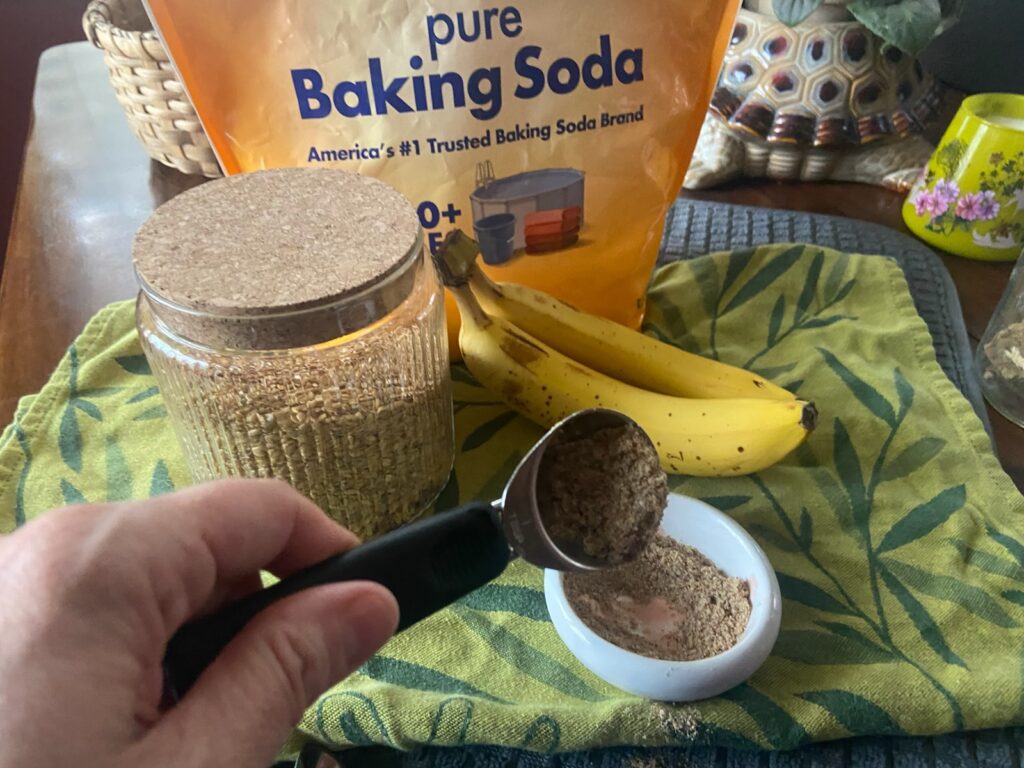
- Ground flax seeds: 1 tbsp. + 2 tbsp. water = 1 egg — let sit for five minutes before using
- Used for structure and binding
- Chia seeds: 1 tbsp. + 2 tbsp. water = 1 egg — let sit for five minutes before using
- Used for structure and binding
- Mashed banana: 1/4 cup = 1 egg
- Used for moisture
- Applesauce: 1/4 cup = 1 egg
- Used for moisture
- Silken tofu: 1/4 cup pureed = 1 egg
- Used for structure, binding and moisture
- Egg replacer such as Bob’s Red Mill Egg Replacer powder: Follow package instructions
- Used for structure, binding and moisture
- Baking soda and vinegar: Add 1-2 tsp. vinegar to standard cake, cupcake, pancake recipes — baking soda included in standard recipes
- Used for structure and leavening
- Aquafaba, the leftover water from a can of chickpeas or after cooking: 3 tbsp. = 1 egg
- Used for structure, best as substitute for egg whites
- Buttermilk or yogurt: about 1/4 cup of liquid = 1 egg
- Used for binding and moisture, best as substitute for egg whites or as the moisture for breading foods
Tips from personal experience
Plucker has found what works best for her family and recommends experimenting to see what types of substitutes you prefer. Here are some of her best tips to get started:
- Combine the baking soda and vinegar egg replacement with any of the other egg options to get a good binder and a good rise for any baked goods.
- Add 1 to 2 teaspoons of vinegar to any recipe that already has baking soda in the ingredients in addition to substituting the eggs with ground flax seeds and water.
- Be cautious when using egg replacers. They are made primarily of gums and powders such as xanthan gum and cornstarch to bind ingredients together. This can give some recipes a gummy and sticky texture.
Get more wellness tips at Avera.org/Balance.
Share This Story
Most Recent
Videos



Looking amazing @dtsiouxfalls and @washpav! Thanks to @jpickthorn for capturing an incredible night.
Nov 26

Enjoy this glow headed into Halloween week! 📸: @jpickthorn
Oct 31
Hope you had a wonderful summer weekend and are recharged for the week ahead! 📸: @jpickthorn
Jun 27
Beautiful way to start a week! 📸: @jpickthorn
Jan 10
Favorite flyover of the year! Merry Christmas from our entire @pigeon605news flock. 🎄🐦 📸: @actsofnaturephotography
Dec 24
They definitely deserve to be treated like holiday royalty and they were! ❤️ these scenes from tonight’s lighting celebration at @sanfordhealth Children’s Hospital. 🎄
Dec 1
The holidays are here! Perfect night @dtsiouxfalls
Nov 27
Happy Halloween from @avera_health NICU babies! Link in bio to see more! 🎃
Oct 31
Did you know @dtsiouxfalls is filled with 👻 stories? Link in bio … if you dare 😱
Oct 8
When it comes to kids parties nobody wants to be cookie-cutter. Link in bio for the story on what’s trending.
Sep 28
Want to stay connected to where you live with more stories like this?
Adopt a free virtual “pigeon” to deliver news that will matter to you.
Read More





Are you a little bird with something to share?

Delivering news that matters to you
Years ago, homing pigeons were used to bring us news we needed. Today, your virtual “pigeon” will deliver what you want to know about the place you call home.
All pigeons are free to good homes!
Our Partners