

As floodwaters rose, rescue effort turned firefighters into heroes
By Steve Young, for Pigeon605
The floodwaters were churning fast around the lake homes when Mike Murphy knocked on the door.
A kitchen light suggested someone was inside, despite water levels rising around the cabin’s foundation. The old man who answered knew why the stranger had come. “You’re not going to make me leave,” he scowled. “You can’t. If you try, I’m going to shoot you.”
Murphy, weary after having already assisted in numerous evacuations, simply said, “Would you mind if we just sat down at your kitchen table for a few minutes?”
It was nighttime, June 23, 2024. Torrential rains – with record two-day totals in Sioux Falls and Mitchell, and as much as 17 inches in Canton – had filled rivers and creeks running south and east to the Missouri River.
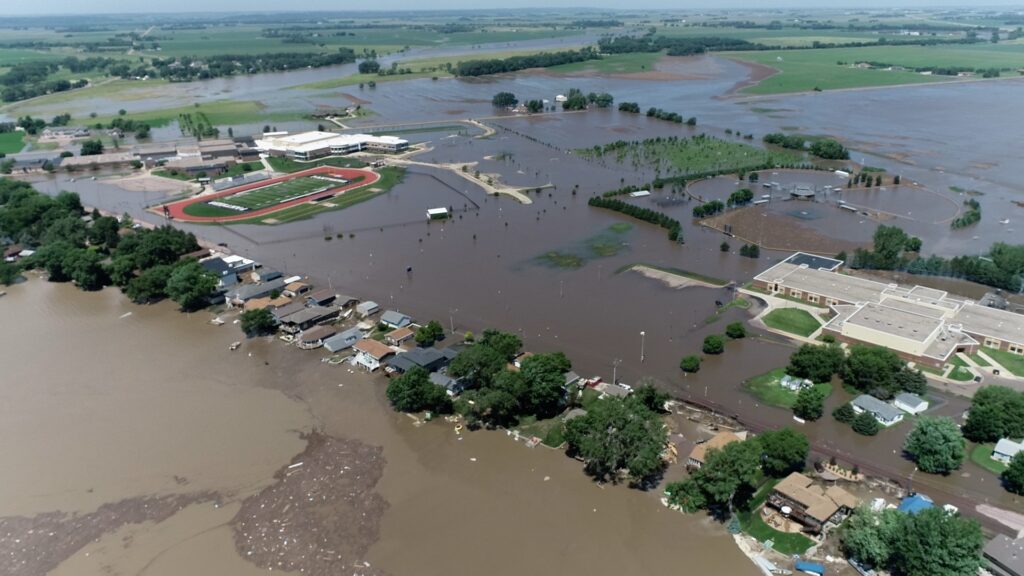
To protect their community, officials in North Sioux City had joined state and private contractors in forging a sandbag-and-clay levee under an Interstate 29 overpass at Exit 4. Tied in with other protective structures, the levee would divert overflow from the Big Sioux River toward McCook Lake, as intended. Unfortunately, the sprawling, unmanageable water descending upon the lake just west of I-29 was more than anybody had ever seen or imagined.
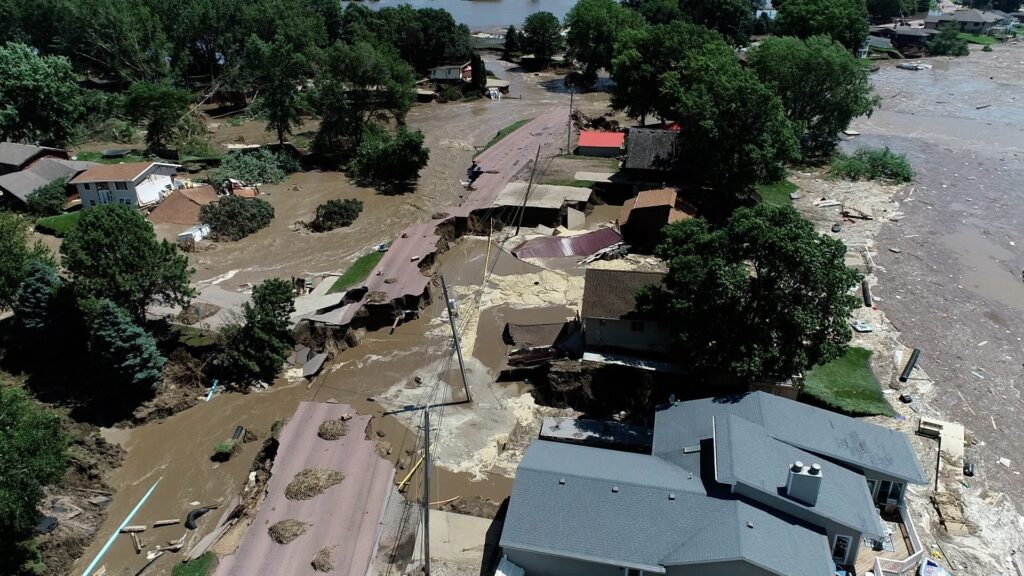
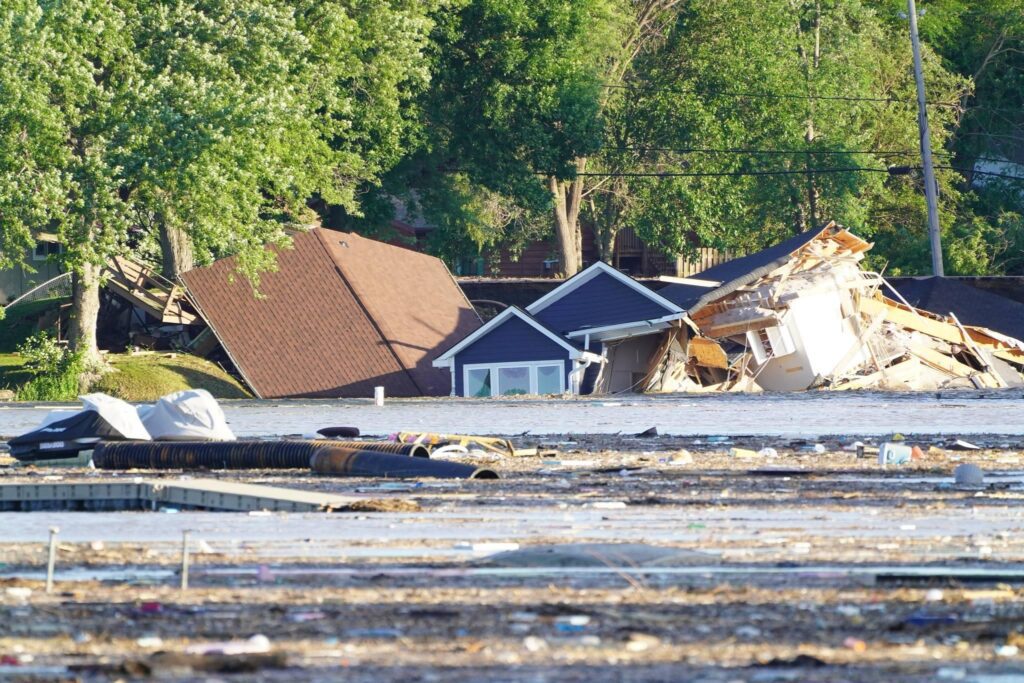
Night into sunlight the next day would play out in a series of daring rescues and evacuations as houses cracked and split apart in the darkness and foundations cascaded into the lake. It turned men like Murphy and his colleagues with Sioux Falls Fire Rescue into something more than just swift-water rescuers doing their jobs.
It turned them into heroes.
This past January, during her State of the State address, then-Gov. Kristi Noem acknowledged as much when she invited Murphy and five of his SFFR colleagues – Michael Olson, Rob Flannery, Chris Lohan, Adam Frick and Jack Claussen – to Pierre to receive medals as part of the Governor’s Award for Heroism. Five others – State Geologist Tim Cowman and four Game, Fish & Parks employees – were honored as well.
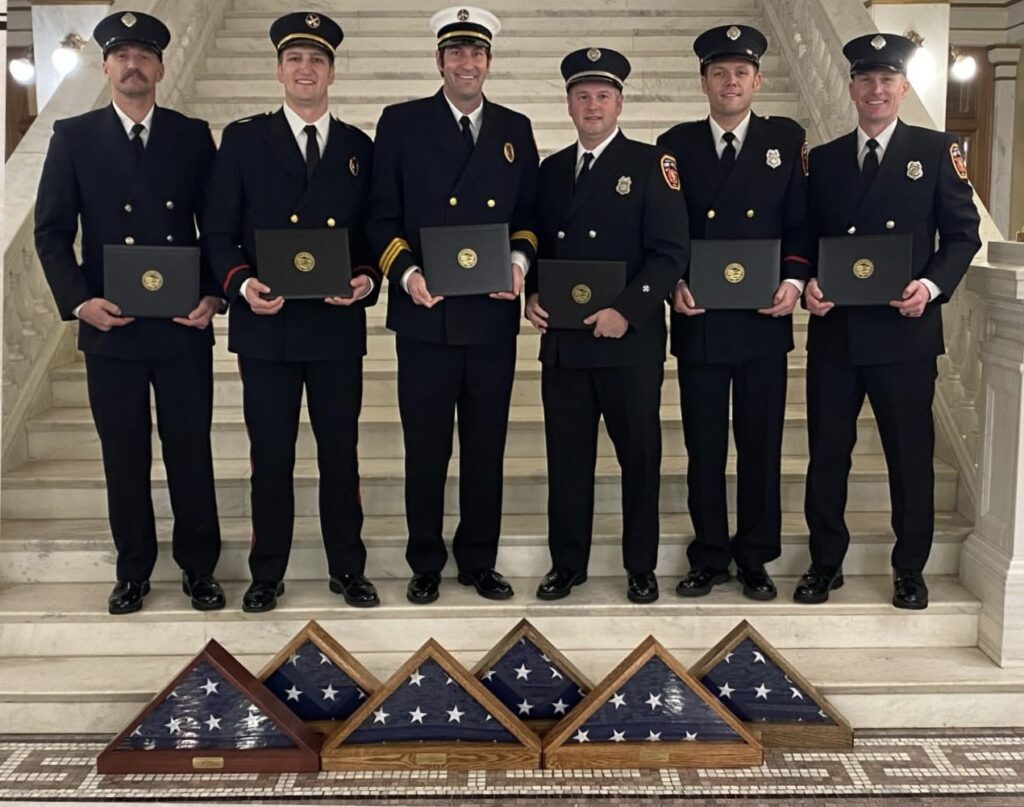
The recognition was appreciated, Murphy said, though never expected.
“I think everyone here would tell you we don’t like awards. We don’t like recognition, he said. “It’s award enough just to be able to go out and do our jobs and help make people’s days better in whatever way we can. But yeah, the recognition was nice. The governor and her team did an outstanding job of recognizing not just us but everybody that played a role.”
On the day they left Sioux Falls for McCook Lake, Battalion Chief Murphy, 41, had an idea his team’s services were going to be needed. He oversees the search-and-rescue program for SFFR, which is also a sponsoring agency for what’s called South Dakota Task Force 1, a state asset that is an all-hazards response team.
On the day before June 23, Murphy had deployed with Iowa’s Task Force and had witnessed the flooding in Hawarden and Rock Valley, Iowa. At that point, there was no crossing the Big Sioux River anywhere between Sioux Falls and Sioux City, he recalled. Every bridge along the way had been overwhelmed and closed.
SFFR got its official notice to deploy the afternoon of the 23rd, a Sunday. Murphy got a head start and headed south in late afternoon before the others. Olson, a 38-year-old captain who handles SFFR’s instruction for the swift-water rescue team, was working Engine One at the Central Fire Station. He jumped over to Heavy Rescue and began organizing watercraft and other necessities before departing.
Flannery, 41, had just returned to his Yankton home with his family after vacationing in the Black Hills. When the mass text came through checking for people’s availability, Flannery cleared it with his wife and headed directly for McCook Lake.
What they witnessed when they arrived, and what they did over the next 14 to 16 hours, will remain with them the rest of their lives, the firefighters said.

Murphy stopped initially on North Shore Drive at the north edge of the lake about an hour before the others from SFFR got there. McCook Lake is a 273-acre horseshoe body of water ringed by homes on its northern shores. Most of those homes sit 15 to 20 feet above the shoreline. Murphy needed to get to the command post at the North Sioux City fire station, but the flooding was already well underway, and the road before him lay beneath water.
“I probably didn’t make it more than about 15 yards, and I started having individuals coming out of their homes asking for assistance,” he said.
While he helped those residents get to higher ground, Olson and the others were on their way with boats and gear. Among the swift-water team’s assets were an inflatable Zodiac watercraft with a motor and a rapid deployment craft, or RDC, powered by oars.
“It looks like a big banana boat,” Flannery said of the RDC. “It was good for getting people out who, for example, aren’t ambulatory. We can set them on that and drag them through 6 inches of water, and they didn’t have to walk through it. We’d get them to a safe spot and then go right back in.”
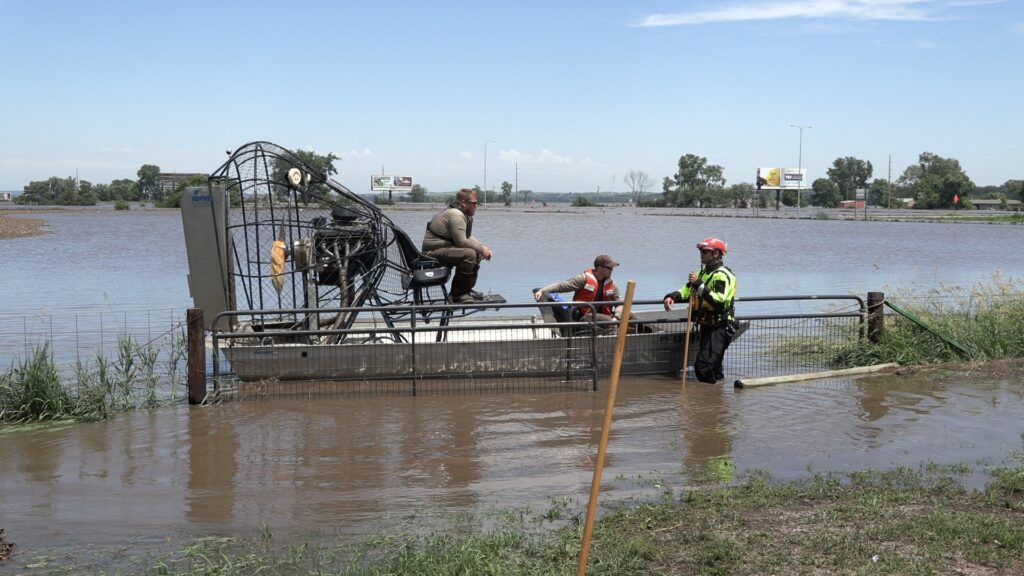
The boats proved particularly useful in maneuvering in and around flooded homes. The heavy rains up north had sent the Big Sioux River out of its banks and sprawling through farm fields adjacent to the lake. The roiling water carved giant trenches in the landscape on the lake’s north shore, sending fast-moving currents through homeowners’ yards.
As valuable as the watercraft were in moving people, they had their own challenges. Submerged cornstalks were constantly plugging the boat’s motor. In dirty, murky water anywhere from knee- to chest-deep, chain-link fences beneath the surface were as much of a hazard as homeowners’ propane tanks floating and hurtling along the evolving channels.
“We realized as the night went on that the boat’s not our option,” Flannery said. “Our best bet was just transitioning to on foot.”
In an unfamiliar environment, with no knowledge of the geography or what lay beneath the water, moving about on foot posed issues as well. They didn’t know street addresses, so needed help identifying where 911 calls were coming from.
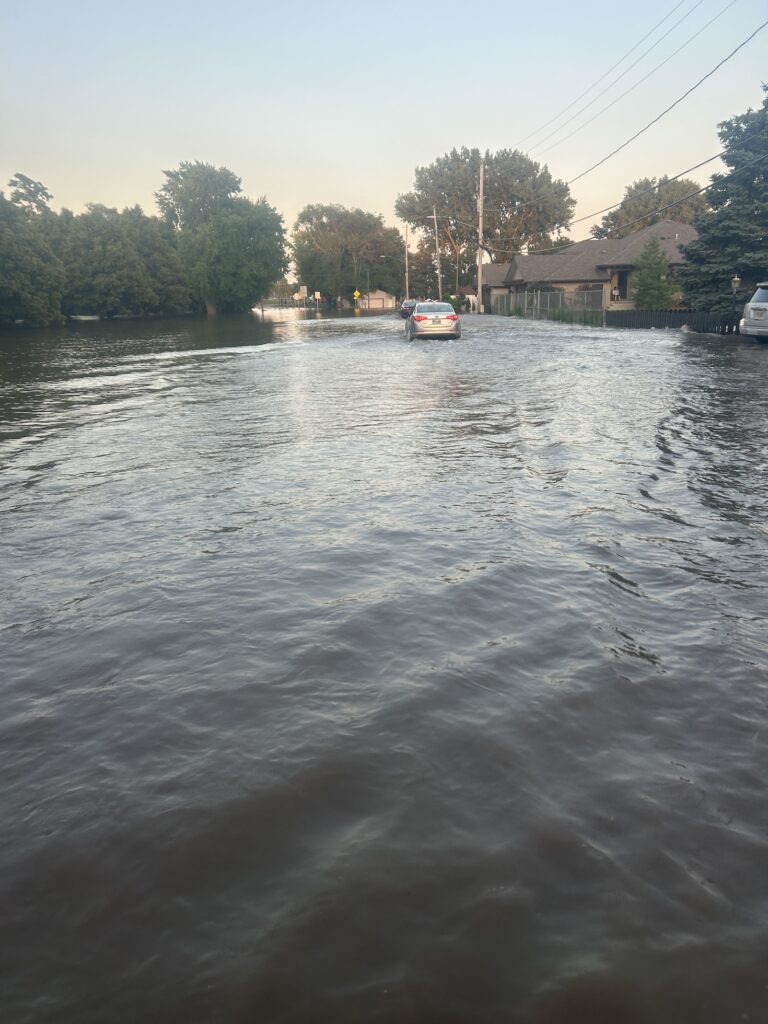
On top of that, on any given call, a section of road that had been knee-deep at dusk could be waist-deep now. To deal with that, Flannery said his favorite tool became a large wooden stick he called a “painter’s pole” that probed the unknown beneath the water.
“Stuff was constantly being eroded out,” he said. “And knowing how water works, the second it starts creating a vein, that vein goes from a foot wide to 3 feet wide, and it’s going deep at the same time. So you had to be mentally focused at all times, probing to know what was going on beneath you.”
Many of the evacuations were fairly routine, situations where team members could put life jackets on residents and walk them to a nearby watercraft or to higher ground. However, as the swift-water rescuers went from home to home, systematically checking off each one as empty or occupied, the line between evacuation and rescue became murkier, Flannery said.
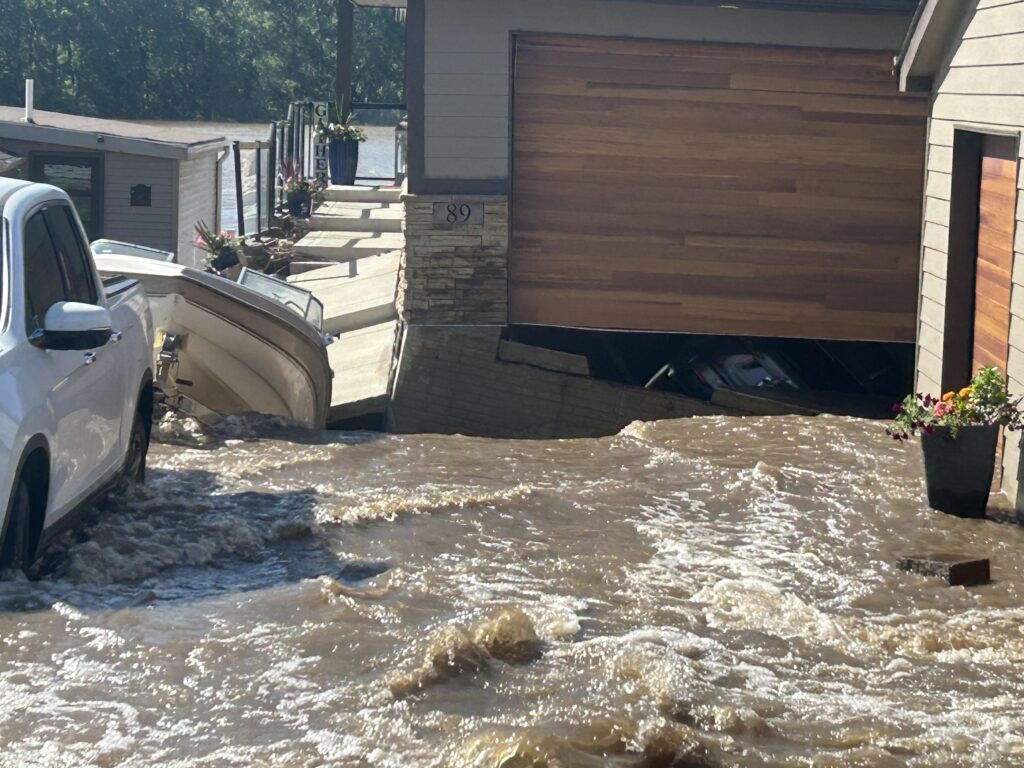
“There were definitely people we helped out of their homes,” he said, “that without our help and assistance, they were not going to be able to leave safely.”
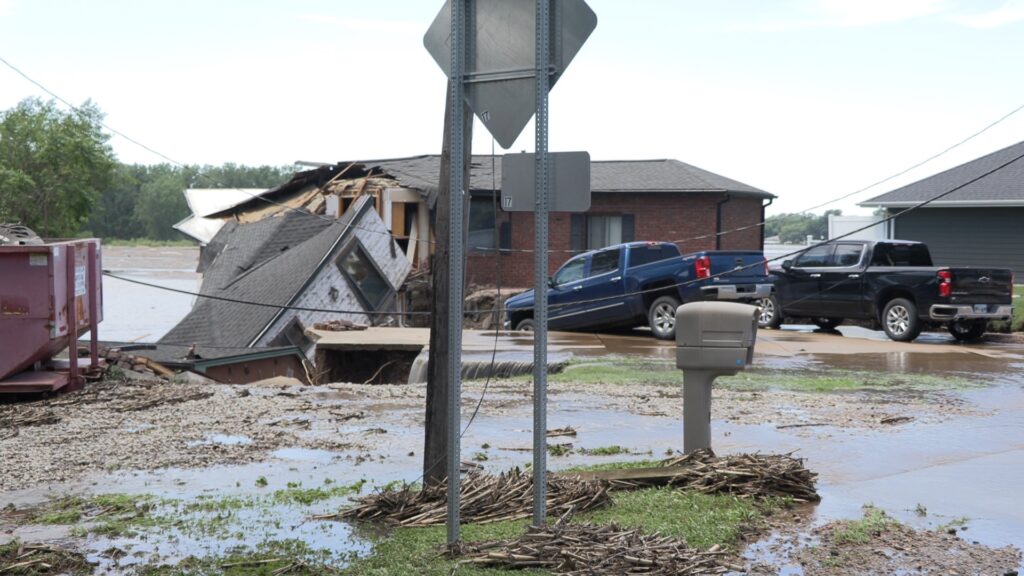
At some homes, conversations weren’t easy, which was understandable, Olson said. The wife was ready to get out; the husband wasn’t. Some believed the floodwaters had already crested. Some weren’t ready to leave homes they had lived in for decades. And some were simply scared and didn’t know where they would go.
Having seen foundations crumbling and houses getting washed into the lake, Olson had just one answer for the woman who wanted to know where she would go.
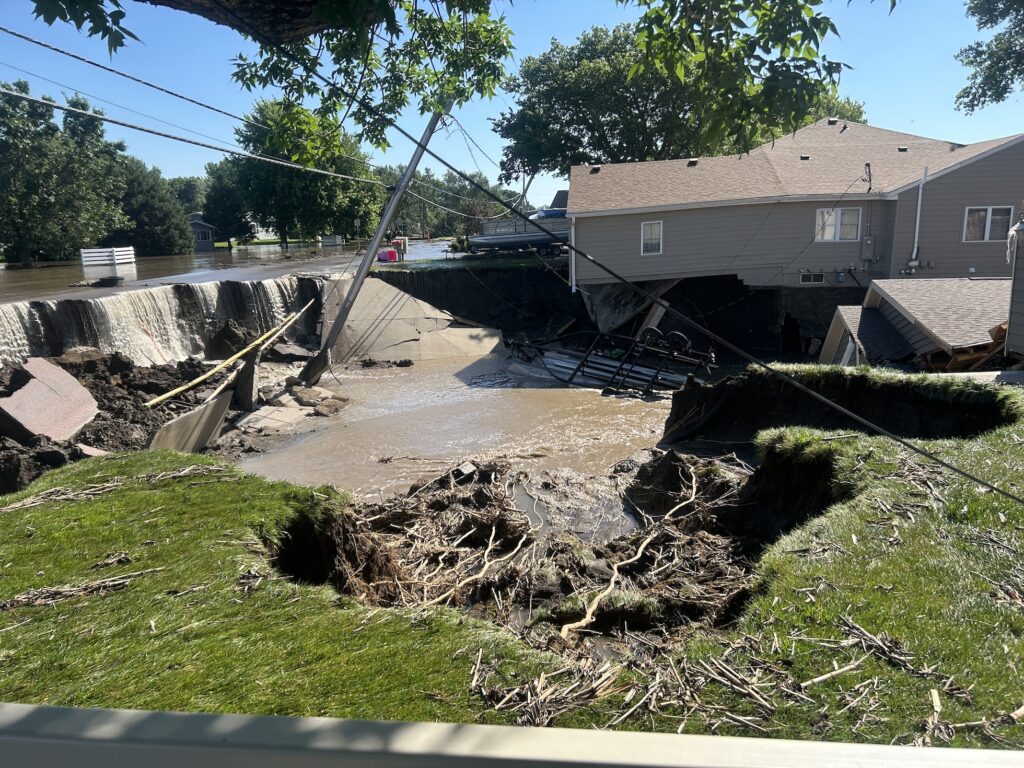
“I told her, ‘I don’t know where you’re going right now, but we’re not staying here,’” he said. “She was one of the ones that we really didn’t give much choice to.”
With no authority to make people leave, Flannery calmly made sure homeowners understood the consequences of their decisions. They could stay, and he would leave, “but this could all look a whole lot different in one hour,” he told them. “So just know that you’re now jeopardizing your life and my life too.”
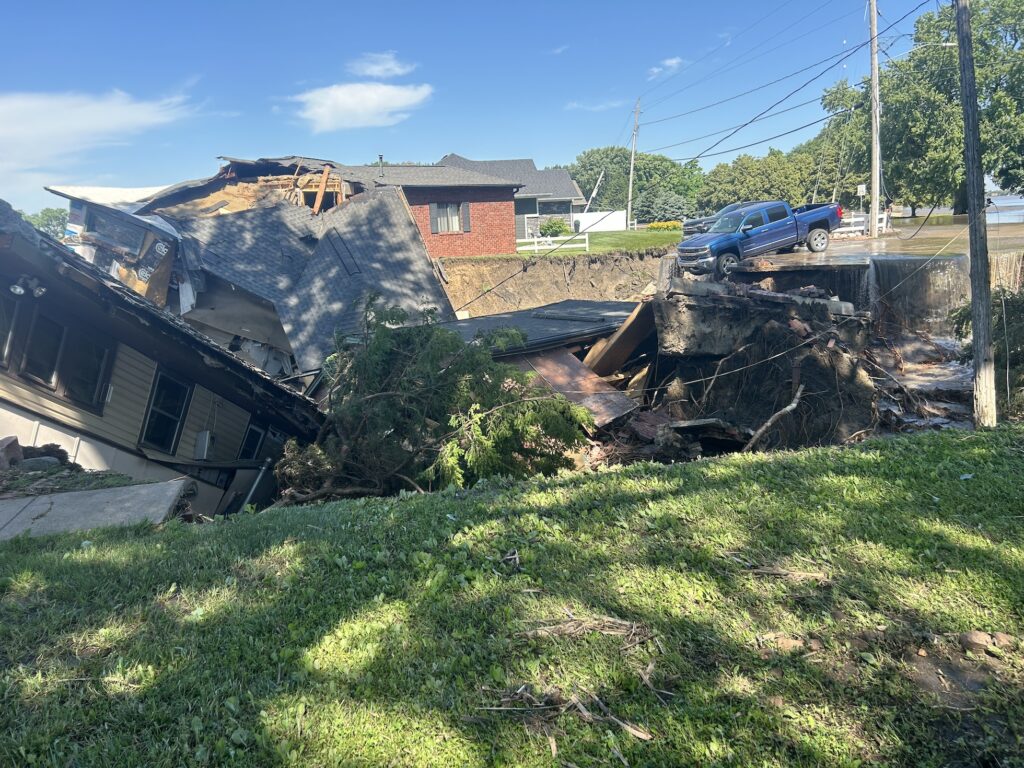
Moving around in the darkness, guided largely by their headlamps and flashlights, the swift-water crew was constantly searching and assisting from roughly 9 p.m. to 2:30 a.m. Calls kept coming in from people at addresses that meant nothing to the rescuers. And even when they could track down the caller, the forces of nature were right there to thwart them.
Olson remembers he and Murphy walking toward a house to assist a woman when they discovered the road was washed out. Standing in water with no maps and no history of the area, they knew one wrong step could wash them away into the lake.
“It was like, man, we’ve got to get to her,” Olson said. “But we couldn’t go any further. It was like, this is not happening.”
In fact, what resolved the situation was a radio call from the command post, where Flannery was using Google Maps and overlays of addresses around the lake to direct his colleagues this way and that way – to safety and to the woman.
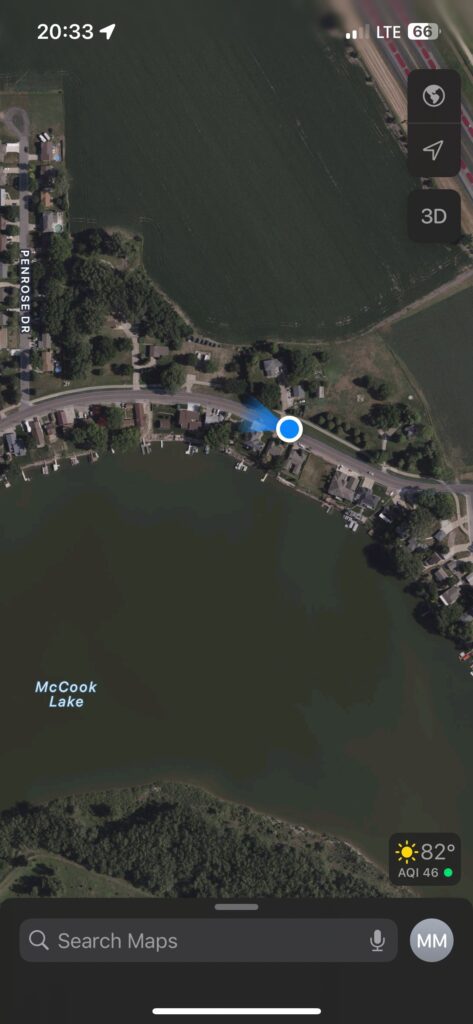
That was just one example of the coordination and the teamwork that saved lives that night, Flannery said. Another, he added, was the work of Game, Fish & Parks personnel with their watercraft and ability to ferry people to safety or to get rescuers in and out of tight spots.
“They were a phenomenal partner in that whole operation,” Flannery said. “Boats, logistical movement of people … they had it and did it. They had guys in the water with us who don’t have water rescue gear like we had. They had to stand in there with their normal duty wear, helping us with anchoring and acting as kind of a safety net for us to get in and out of some tricky spots.”
And there were plenty of tricky spots.
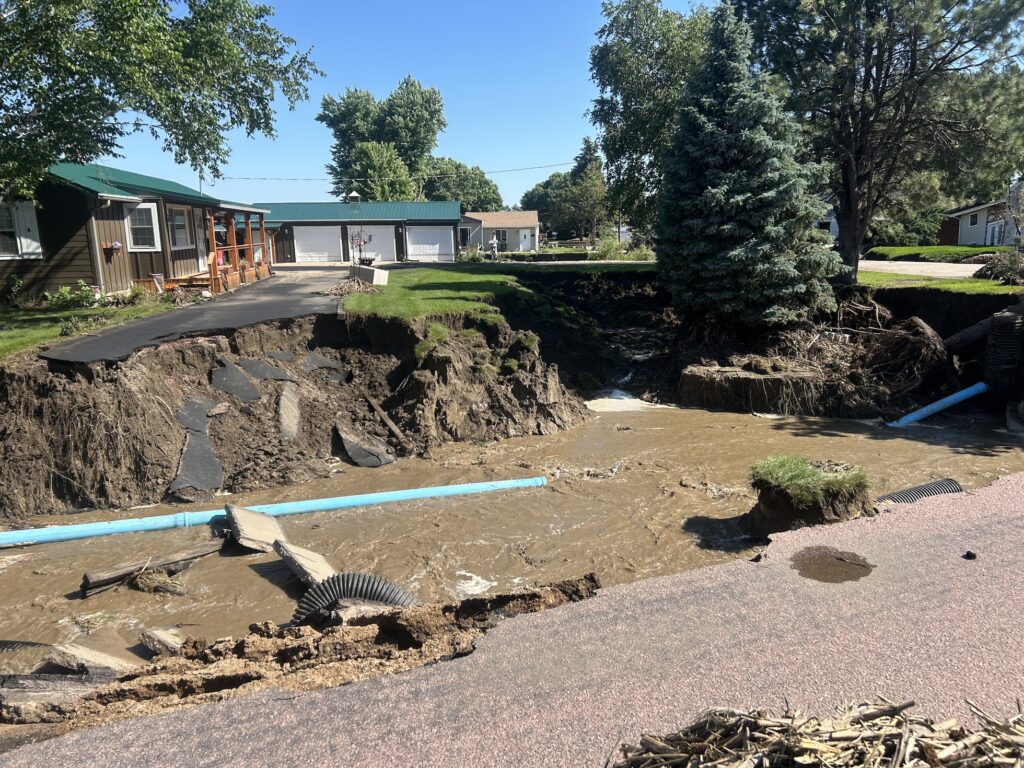
One involved a couple standing at the edge of their garage. When they saw Olson and Flannery, they started walking toward them, not realizing that the approach to their garage was gone, and that 2 to 3 feet of rampaging water was funneling right toward them between the houses.
There was no time for discussion, Flannery said. He and his partner quickly decided to tether the man and woman to themselves and put life jackets on them. But what about our medicines, the couple asked? What about our cat?
They rescued a lot of pets, Flannery said. No one wants to leave pets behind, and the rescuers didn’t want that, either. Part of the preparation for that possibility was a roll of electrical tape.
“For a muzzle,” Flannery said. “As much as everyone thinks their pet isn’t going to bite you, it’s dark, I’m a stranger, and now I’m going to drag you through water. That’s like a bad recipe.”
One by one, crew members walked the couple to safety. In that case and others, the raging water could have swept them all away and into the lake. “Sometimes, safety has to take, I won’t say a backseat, but sometimes you have to risk a lot to save a lot,” Flannery said. “In that situation and others, I think we made some calls that were very difficult, very high risk.”
At one point, as he moved down the street, Murphy heard what he called thumping noises. A man was trapped inside his garage, unable to open the door against the pressure of water that was rising outside the structure. And inside the house, where the water was now waist-deep, the man’s wife was in the bedroom with a walker and also unable to get out.
Murphy forced the garage door open and, with what he called “a big bear hug,” walked the man to safety. He did the same for the man’s wife. His actions had to be calculated and quick, he said. He had witnessed basement walls blowing out because of water pressure and falling into the lake. “At that point,” he said, “time was everything. I knew people were worried about things in their homes, but we were going to start to see homes move and possibly disappear.”
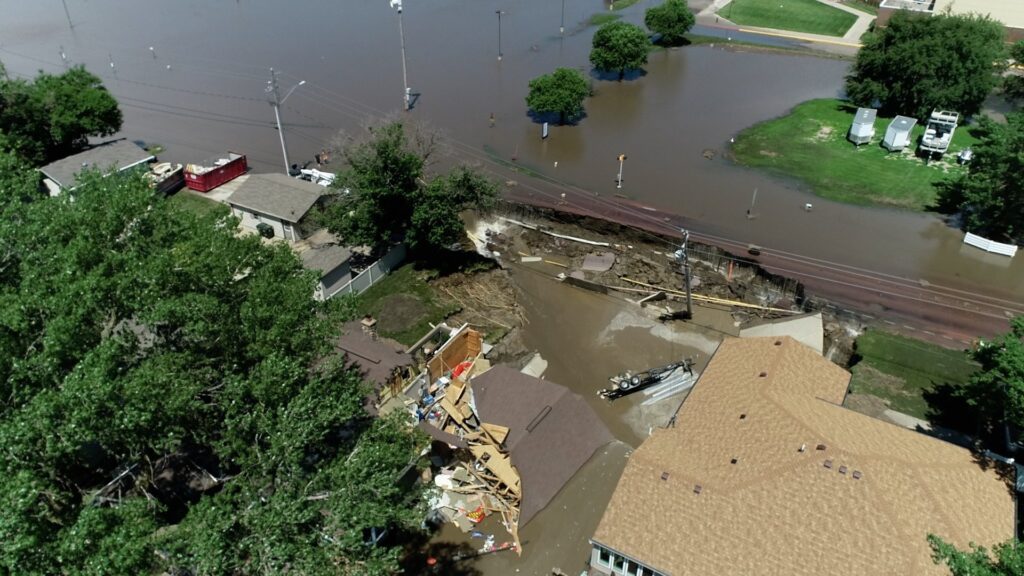
In one of the most dramatic rescues, Murphy and Olson saved a woman on her porch with what Olson called a tension diagonal – a rope they tossed to her that she secured on her end, and they secured on their end. Guided by the rope, Olson made his way through the rampaging water to get her and bring her back.
It was a dramatic moment. Both rescuers were already having a difficult time staying on their feet because of the swift water. And if Olson lost his footing after getting to the woman, they would both tumble at least 200 yards through hazard-filled water to the lake. On top of all that, though they had trained using the tension diagonal, Olson said he had never really had to use it before.
Fortunately, the rescue ended successfully. The woman was even able to bag her medications and bring those too. Unfortunately, there was a pet, a dog, she wanted to bring as well. And while he told her he would do his best to go back for the animal, Olson said the situation made that impossible.
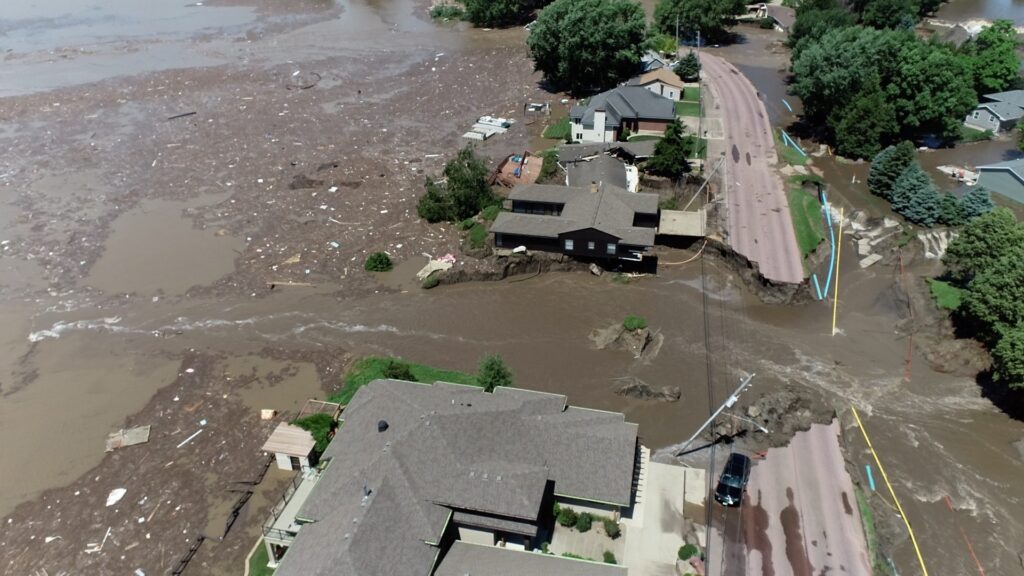
Murphy said he couldn’t justify the risk to his colleague to go back. While Olson agrees with the decision, it haunts him nonetheless.
“That bothered me a lot,” he said. “I hope she can find it in her heart to forgive me someday, that she can say, ‘Hey, you made a call.’”
By 2:30 a.m., laboring in their sweat-filled protective dry suits and swatting at mosquitoes, the gassed rescuers didn’t have any more calls for assistance. They made their way to higher ground, found a ditch with low-cut grass near a farmer’s Morton building and laid down. There would be a few more evacuations the next morning, but their work was ostensibly done. They would be heading home by early afternoon that next day.
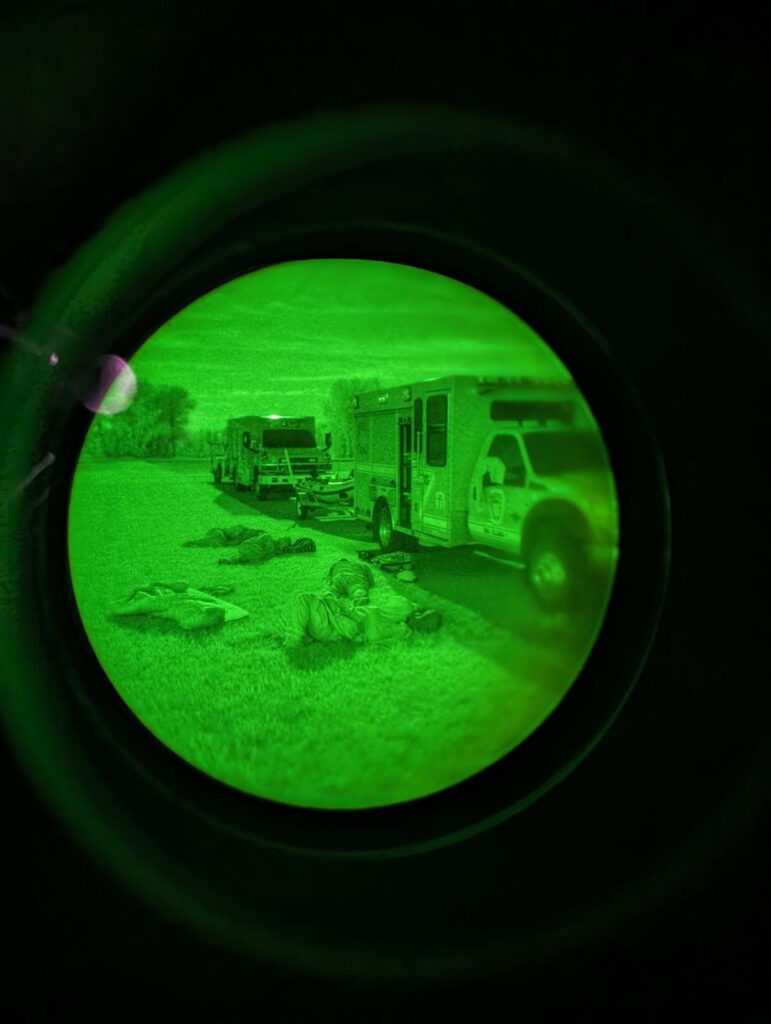
Unable to sleep and proud that, as far as they knew, no one had died in the flooding, “we just laid there on that grass and just kind of giggled at times,” Flannery said. “Just laid in the ditch and laughed and connected on all the experiences we had just had together.”
There would be debriefings in the days ahead. What went wrong? What could they have done better? But, really, how well their work and the night turned out too. And just the reality that when called to a major disaster, they answered and performed as best they could.
“I knew that this was going to be somebody’s worst day … a tragedy. I knew that,” Flannery said. “At the same time, this is like our Super Bowl, right? We train really hard all the time to be prepared for something of this caliber. So when we have a chance to have an impact, we’re up for it. It is exciting for us.”
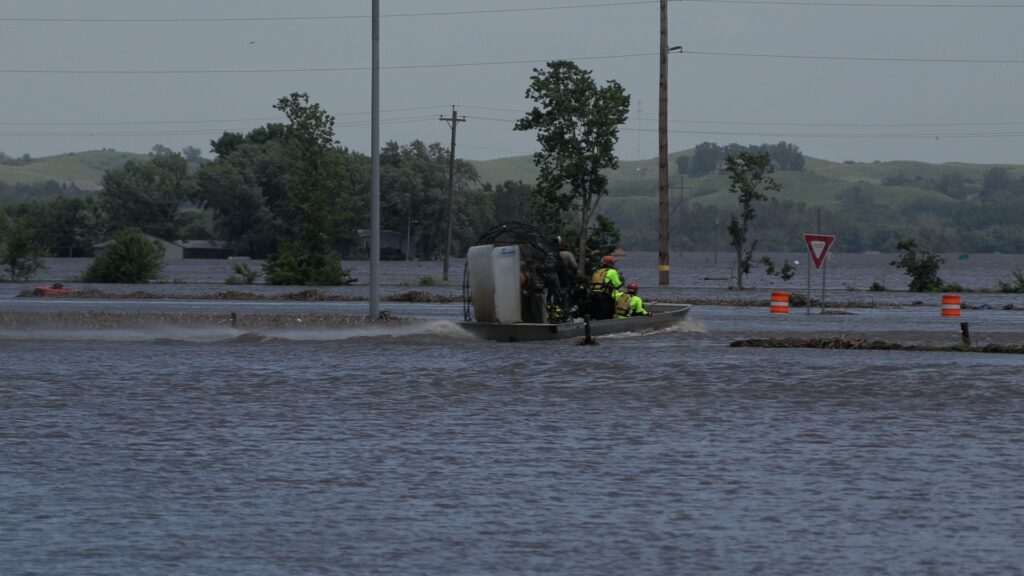
Murphy doesn’t say this lightly, but he feels confident that there would have been multiple fatalities had the swift-water crew not been there to help residents get out. News reports have indicated that 103 homes were destroyed and damaged in that flood. Knowing that number today, he goes back to the old man he encountered that night, the one who said Murphy couldn’t make him leave, and he would shoot him if he tried.
Despite the chaos and flooding around them, Murphy and that old man sat around the kitchen table for 10 to 15 minutes. The gentleman talked about his 80-plus years of life, about his service in the military, about the family and grandchildren who meant everything to him.
Listening patiently, Murphy finally flat out told him that he likely would die if he stayed. Though the man still hesitated, he gathered up some belongings and reluctantly agreed to leave. As they stepped outside, he was half-stunned by the fast-moving water.
“I didn’t know,” he said, “that it was this bad.”
“I know you didn’t,” Murphy calmly replied. “That’s why we’re here.”
The next morning, with the sun shining, Murphy went by that old veteran’s house and knew they had made the right call. The house lay collapsed in a pile by the shore of the lake. And the kitchen table they had sat around hours earlier was there, too, broken and sitting in a heap at the water’s edge.
Share This Story
Most Recent
Videos



Looking amazing @dtsiouxfalls and @washpav! Thanks to @jpickthorn for capturing an incredible night.
Nov 26

Enjoy this glow headed into Halloween week! 📸: @jpickthorn
Oct 31
Hope you had a wonderful summer weekend and are recharged for the week ahead! 📸: @jpickthorn
Jun 27
Beautiful way to start a week! 📸: @jpickthorn
Jan 10
Favorite flyover of the year! Merry Christmas from our entire @pigeon605news flock. 🎄🐦 📸: @actsofnaturephotography
Dec 24
They definitely deserve to be treated like holiday royalty and they were! ❤️ these scenes from tonight’s lighting celebration at @sanfordhealth Children’s Hospital. 🎄
Dec 1
The holidays are here! Perfect night @dtsiouxfalls
Nov 27
Happy Halloween from @avera_health NICU babies! Link in bio to see more! 🎃
Oct 31
Did you know @dtsiouxfalls is filled with 👻 stories? Link in bio … if you dare 😱
Oct 8
When it comes to kids parties nobody wants to be cookie-cutter. Link in bio for the story on what’s trending.
Sep 28
Want to stay connected to where you live with more stories like this?
Adopt a free virtual “pigeon” to deliver news that will matter to you.




Are you a little bird with something to share?

Delivering news that matters to you
Years ago, homing pigeons were used to bring us news we needed. Today, your virtual “pigeon” will deliver what you want to know about the place you call home.
All pigeons are free to good homes!
Our Partners