
In bringing life back to their farm, couple opens it for flower-picking
Heifers once grazed on rolling pasture near Garretson.
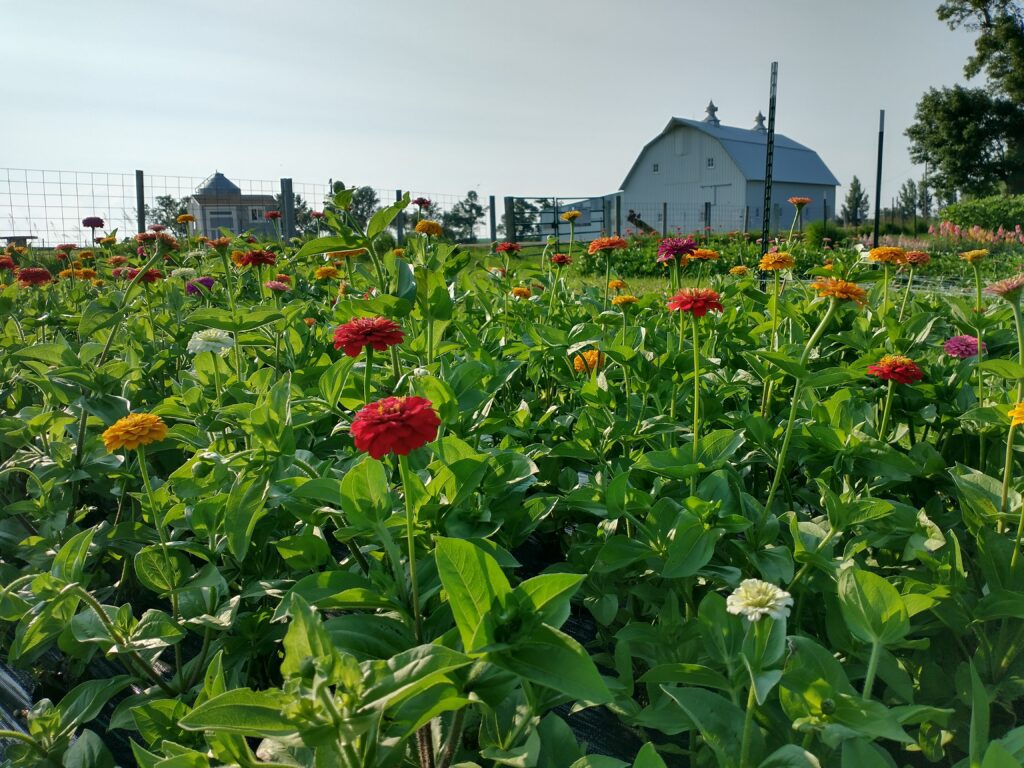
Now, everyday flowers such as zinnia, sunflower, snapdragon and dahlia, as well as the more exotic-sounding rudbeckia, celosia, gomphrena, feverfew and amaranth fill 2,400 square feet of the meadow where young dairy cows once held court.
Brittany and Kyle Lessman looked at the empty pasture daily for several years before deciding it was time to return to farming, although of a much different sort than previously.
“The lot sat empty for a few years. We were living on a farm but not really living the farm life after the cattle left. We wanted to bring life back into the farm,” Kyle Lessman said. “We both have off-the-farm full-time jobs, so we didn’t need to make a quick change in our career paths. But after so long of watching the cattle lots fill up with leaves, I said, let’s plow this one under and plant something.”
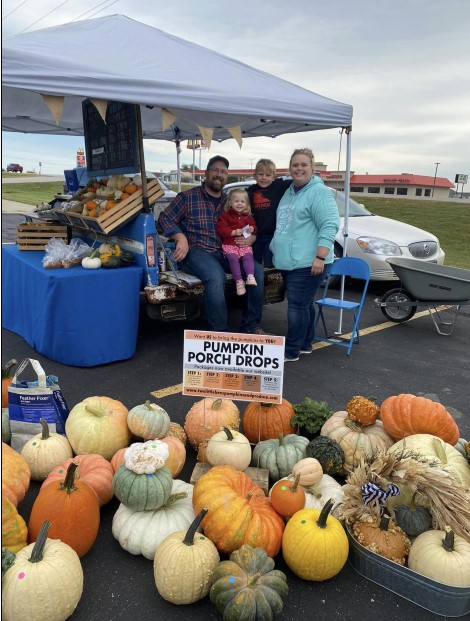
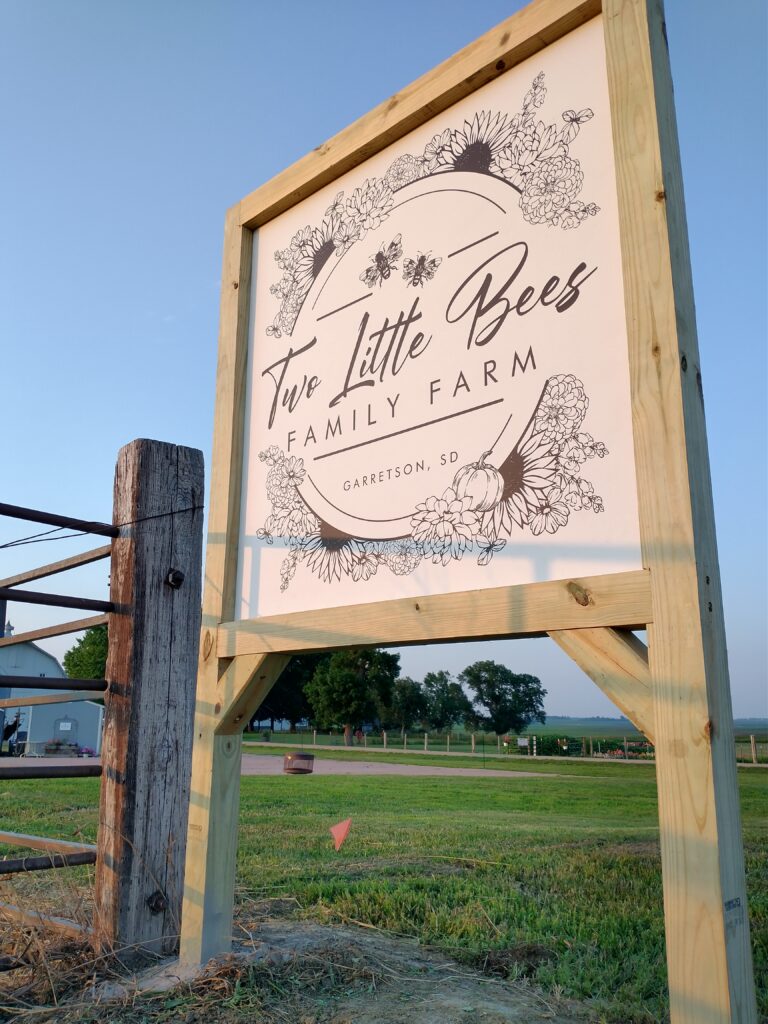
That first year, the Lessmans focused on growing pumpkins. In the fall of 2020, Two Little Bees Pumpkins and Produce made its debut at the farmers market in Brandon.
“That first year, we just had a small pumpkin patch, and I didn’t know what I was going to do with it,” Kyle said. “Brittany thought I was crazy.”
Brittany Lessman doesn’t dispute that but added, “I was on board after we went to the Brandon Farmers Market and made some sales.”
The year 2020 was when their second child, daughter Bria, was born, joining older brother Beau, now 7. That also was the year of the COVID pandemic and the lockdown, and the pumpkin patch gave the family a way to spend a lot of time outside. The Lessmans named their business after their “two little bees,” their children.
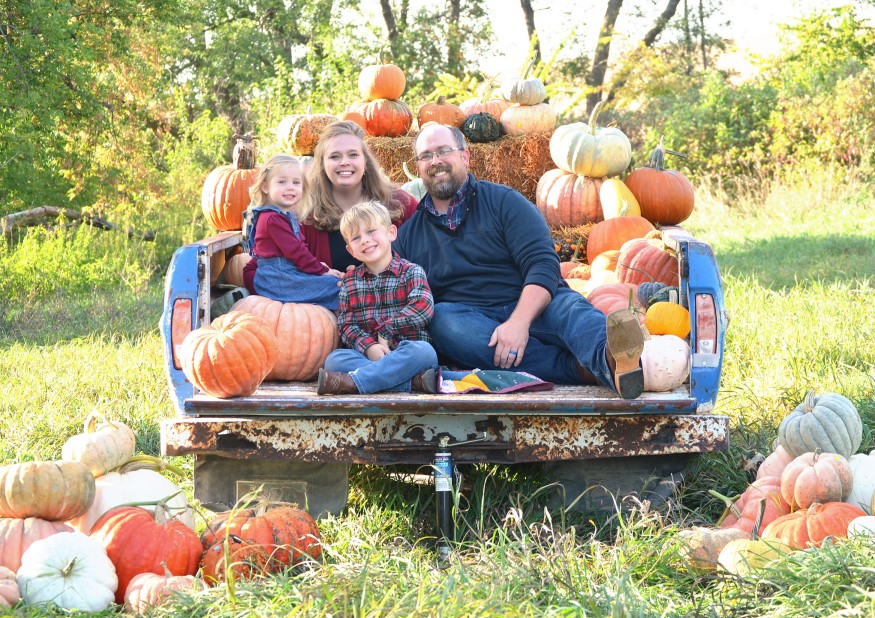
The first pumpkins grew in a 20-by-50-foot patch. The Lessmans doubled it in 2021 and again in 2022, and today it covers just under an acre. Two Little Bees offers more than 30 varieties of pumpkins, squash and gourds. Colors include the traditional orange along with pink, blue and yellow; the rinds are both smooth and warty.
In 2021, the farm added its Truck Bed Farm Stand, built from a 1950s Ford pickup bed, to its farmers market setup at home. There, customers could find pumpkins and squash, greeting cards and excess garden produce.
But the Lessmans weren’t done yet.
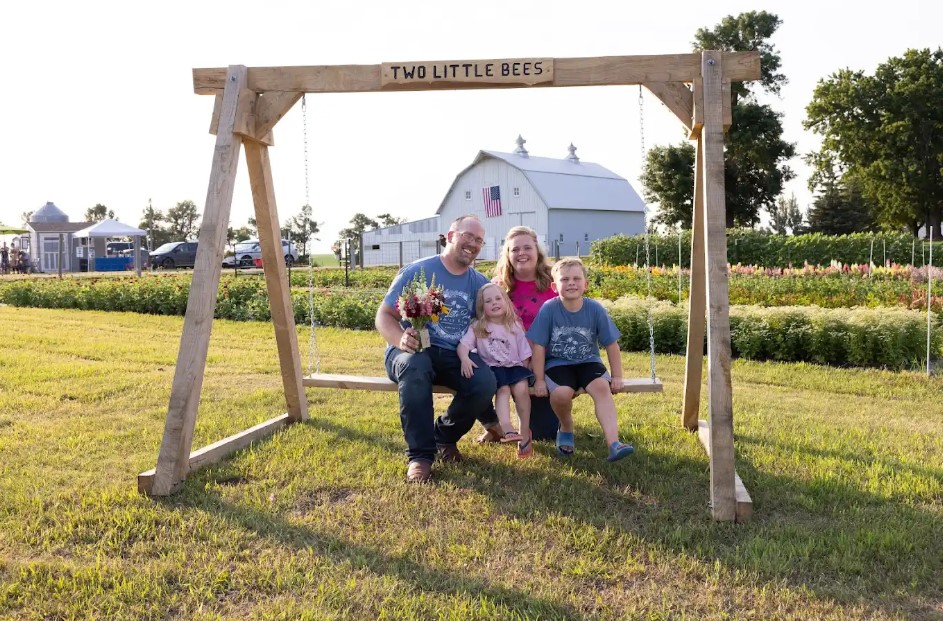
“We kind of got into the specialty-growers, homesteaders realm,” said Kyle, a graphic designer for a Luverne, Minnesota, print shop. “We started to see what other people across the country were growing. We could see the rise in people growing local flowers.”
“We thought that would be a good thing for the community as well,” said Brittany, who works in the Sanford Health marketing department. Most smaller towns don’t have businesses that provide residents with fresh-cut flowers and bouquets.
In 2022, Kyle planted a small flower field to see if he could grow flowers. They did, which meant he had to decide on his next step. That first summer, they began selling about five bouquets a week at a Garretson coffee shop, Annie’s. They also gave away about as many bouquets as they sold that first year, with family, friends and local nursing homes the beneficiaries.
The Lessmans didn’t know it, but they were joining a growing trend in South Dakota. The number of producers in the state who are growing specialty products is growing, and flower farms are among the most popular, said Chris Zdorovtsov, marketing contractor for the South Dakota Specialty Producers Association. The SDSPA includes producers and supporters who coordinate education, promote the industry and offer networking and connections among those growing noncommodity-type products such as fruits and vegetables, wines, mushrooms, microgreens, honey and hops.
And flowers.
“This has just exploded the last couple of years,” Zdorovtsov said. “A couple of years ago, we had a handful of producers that were focused specifically on cut flowers. We had a couple. In the last three years, we’re probably now over 30 that are focusing on flower production. Maybe they were a fruit and vegetable grower with a few flowers. Now, flowers are the main focus of their business.”
Many of the flower producers sell their “crops” directly to consumers through farmers markets or hosting agritourism on-farm events. Others sell to flower shops or design the bouquets themselves. A Rapid City producer sells her flowers to the wholesale market.
The SDSPA has started a subgroup of flower producers, offering monthly meetups where they can learn about topics such as pest control or simply network. New business owners are open to sharing information with those in the same field. South Dakota State University also has been involved and is offering a field day Aug. 21 at Blue Dasher Farm near Estelline and Freedom Acres at Brandt.
“There’s a lot of energy here right now with this flower industry,” Zdorovtsov said.
The Lessmans are part of that energy. Brittany and a sister are the third generation in their family, spanning back more than 60 years, to take part in farming. Kyle was raised in the Tracy, Minnesota, area, where his family had a small cow-calf operation.
They both attended SDSU, although they didn’t officially meet there. That came about when Kyle took a picture of Brittany participating in a Little I competition at SDSU and tagged everyone involved in Facebook.
When they got married nine years ago, they knew they were going to farm near Garretson. Brittany’s family had acquired the land to raise heifers in 2011 when a neighbor retired.
“At the time, we thought it was going to be in dairy, but life changed,” Brittany said. The family dairy operation closed in 2018.
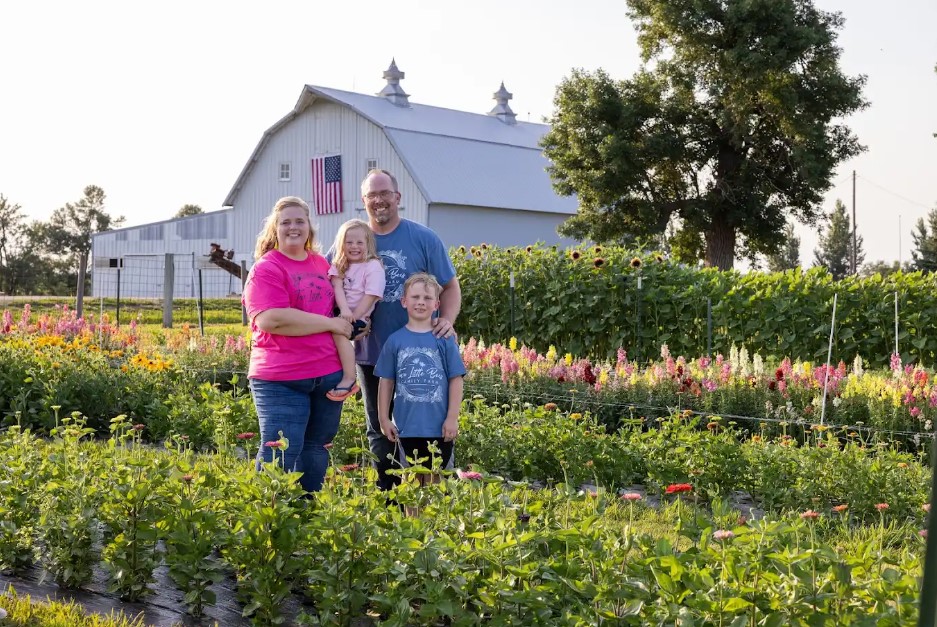
This summer, Two Little Bees boasts eight 50-by-6-foot rows of flowers. The colorful beds offer zinnias, “a real workhorse” among flowers, the couple said; rudbeckia, which resemble black-eyed susans but are much bigger; amaranth, a small grain with pretty feathery tops; feverfew, which resembles tiny daisies; and some specialty flowers like bells of Ireland kept for their subscribers.
The subscriber program started last year. With Summer Flower Subscriptions, customers prepay for eight weeks of bouquets throughout the growing season. Flower types and color schemes change every week, but the cut flowers are among Two Little Bees’ freshest and finest. Pickup locations include the farm stand and Quality Printing in Luverne.
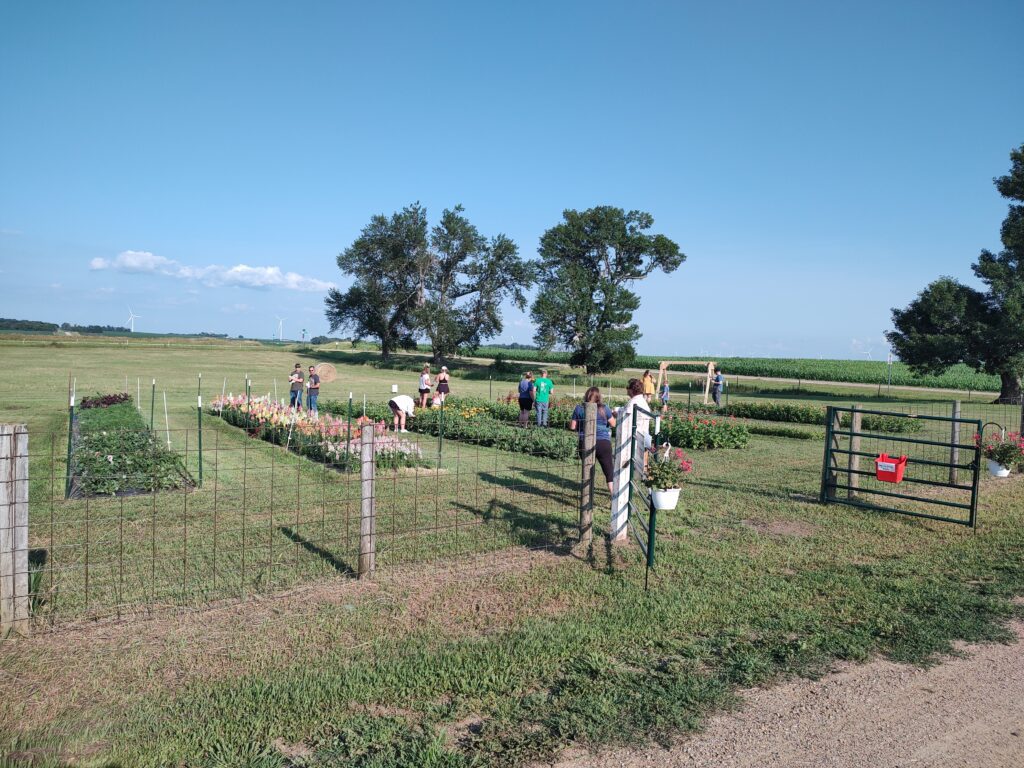
Two Little Bees also has ventured further into agritourism with you-pick events offered Friday and Sunday evenings, now through the first frost. The you-pick nights operate as presold ticketed events to limit participants and ensure that guests have a relaxed and enjoyable time.
“We are only selling about 50 tickets a night. We don’t want crowds; people fight crowds all day long,” Kyle said.
“We want a fun environment that isn’t overly stimulating, that brings a little peace into your life,” Brittany added.
“And let’s people get out into the country,” Kyle continued, with Brittany’s summation: “This all comes back around to our kids. It’s a good portion of why we’re doing this. It was another piece I saw missing as we’re raising our kids, teaching responsibility and understanding the circle of life.”
The Lessmans will provide the snips and a 20-ounce paper drinking cup; customers can pick as many flowers as they can fit into it. A cup that might hold only five sunflowers could easily fill up with 15 snapdragons, or whatever the customer wants, Brittany said.
The Lessmans continue to take surplus flowers to Annie’s on Tuesday mornings, giving people a chance to purchase flowers using the honor system. They stress that Two Little Bees Family Farm is not a florist, just a family business that offers mixed market bunches.
And Kyle continues to see how he can make his garden grow. Last fall, about 500 tulip bulbs were planted, blooming in time for Mother’s Day gifts. Two Little Bees brought them into Garretson and sold out by 10 a.m.
Kyle will expand the variety of flowers he plants. He’d like to offer lisianthus, or prairie gentian, and Cressida flowers.
“I try some new things every year,” he said. “Some things I’m not good at growing. I’m not good at celosia at all, but we keep trying. I’m not good at strawflowers, but we keep trying to grow those too.”
When Brittany leaves her family farm, with its picturesque white barn, she slows her vehicle to enjoy the spectacle of row after row of colorful blooms.
“I take a short video just to see the progress,” she said. “It definitely puts a smile on your face as you go out.”
Share This Story
Most Recent
Videos



Looking amazing @dtsiouxfalls and @washpav! Thanks to @jpickthorn for capturing an incredible night.
Nov 26

Enjoy this glow headed into Halloween week! 📸: @jpickthorn
Oct 31
Hope you had a wonderful summer weekend and are recharged for the week ahead! 📸: @jpickthorn
Jun 27
Beautiful way to start a week! 📸: @jpickthorn
Jan 10
Favorite flyover of the year! Merry Christmas from our entire @pigeon605news flock. 🎄🐦 📸: @actsofnaturephotography
Dec 24
They definitely deserve to be treated like holiday royalty and they were! ❤️ these scenes from tonight’s lighting celebration at @sanfordhealth Children’s Hospital. 🎄
Dec 1
The holidays are here! Perfect night @dtsiouxfalls
Nov 27
Happy Halloween from @avera_health NICU babies! Link in bio to see more! 🎃
Oct 31
Did you know @dtsiouxfalls is filled with 👻 stories? Link in bio … if you dare 😱
Oct 8
When it comes to kids parties nobody wants to be cookie-cutter. Link in bio for the story on what’s trending.
Sep 28
Want to stay connected to where you live with more stories like this?
Adopt a free virtual “pigeon” to deliver news that will matter to you.




Are you a little bird with something to share?

Delivering news that matters to you
Years ago, homing pigeons were used to bring us news we needed. Today, your virtual “pigeon” will deliver what you want to know about the place you call home.
All pigeons are free to good homes!
Our Partners