
The surprising similarities between Hallmark movies, cryptocurrency, asset bubbles
This paid piece is sponsored by The First National Bank in Sioux Falls.
By: Adam Cox, chief wealth management officer at The First National Bank in Sioux Falls
I have a confession to make: I love Hallmark movies. I truly do.
You can make fun of me all you want — and trust me, people do — but I’m not about to change my mind.
So how can it be that a 40-something male bank executive loves watching the most cliche and cheesy of all movie genres, you ask?
Well, like you, my life can be incredibly stressful. Sometimes, I just need a brief escape. Enter: the Hallmark Channel!
For 90 minutes a week — and many, many more minutes during the Christmas season — I try to enjoy a little levity. Do I really think that all men eventually will become single dads struggling to find love again? Or that a picturesque small town in Montana can band together to save a clearly uneconomical general store from going under?
Of course not. But I’m willing to suspend my disbelief for those 90 minutes because the stakes are so low for me, personally.
Best-case scenario: I enjoy a heartwarming story with a happy ending. At worst, I waste 90 minutes watching a bad movie. You better believe I’m willing to take that risk.
But what happens when we suspend our disbelief in other areas of our lives, particularly when the stakes are considerably higher?
If you’ve been paying attention to the news recently, you’ve likely heard about the dramatic unraveling of prominent founders, companies and investors in the cryptocurrency space. Many of us have watched, shaking our heads, wondering how this could have happened.
However, while the circumstances may be unique, what’s happening right now isn’t new. In fact, we’ve seen it many times before.
How many of you remember the run-up before the dot-com bubble burst? Investors suspended their disbelief, thinking that every company with a .com at the end of its name — no matter what they made — was going to completely transform our economy while making us fabulously wealthy along the way. And those companies did — until they didn’t.
Or what about the housing bubble of the mid-2000s? Remember when everyone thought that housing prices only went up — a lot — and they could buy as many homes as they liked without a reasonable way to pay for the mortgages? That worked too — until it didn’t.
Now comes crypto.
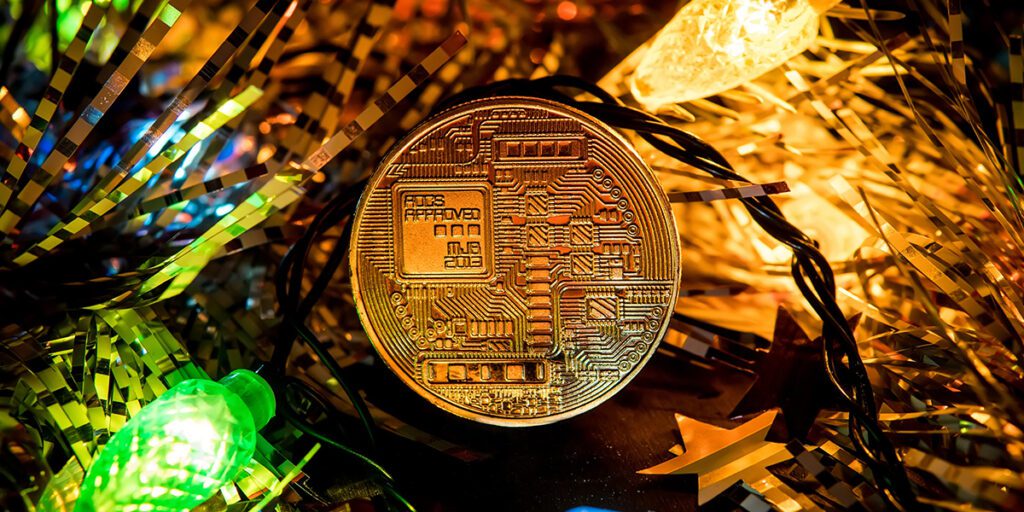
I’m not yet willing to declare that what we’ve witnessed recently is part of a bubble bursting. I think that would be a bit premature, but it has started to feel that way.
Over the past couple of years, it seemed like everyone was in crypto. Which one? Didn’t matter — they all were “going to the moon.”
Just like with a 90-minute Hallmark movie, millions of investors suspended their disbelief and grabbed on to the idea that crypto would remake money and our financial systems without the need for regulation or accountability. And those who put their money behind that belief made lots of money.
You couldn’t escape it. Everyone was getting in.
Even many of the holdouts who didn’t trust it at the beginning eventually caved after enduring stories from their friends or family members about how much money they were making trading crypto. It worked — until it didn’t.
Now, I’m sure some of you are starting to sharpen your knives and getting ready to carve me up like a Thanksgiving turkey for saying this.
You might call me old-fashioned or say that I just don’t get it. Who knows, maybe you’re right — on both counts.
But what I do know is that an examination of the history of markets reveals the same patterns time and again. Investors believe that “this time is different.” And they are always right — each time is different.
Every period of euphoria, which gets labeled as a bubble in the aftermath, is different. If they were all the same, we wouldn’t keep making the same mistakes over and over.
But while these periods are different, they all share some of the same characteristics. It can be difficult to recognize that pattern when we’re living through them, but they all have one thing in common: our willingness to suspend our disbelief.
What happens next with crypto is unknown, but I suspect we’ll experience at least some of the following — please keep in mind that these are my personal opinions and not investment recommendations:
- Inflation will impact consumer spending.
Governments around the world spent the better part of the past three years pumping previously unthinkable amounts of money into the financial system, which, not too surprisingly, became a primary driver of the high levels of inflation we’re experiencing now.
While consumers begin to reconsider their spending as they struggle under the weight of higher housing costs, prices at the pump and in the grocery store, investors will have less free cash flow to invest.
We’re seeing this already as stimulus money has begun leaving consumer bank accounts at accelerating rates and credit card balances return to pre-pandemic levels.
- Investors will reexamine their portfolios.
With the risk-free rate of return — the amount investors can earn from Treasuries — currently over 4 percent, investors are taking a fresh look at their portfolios and reexamining how much risk they are willing to chase with the fewer dollars they have to invest.
This will continue to put pressure on investments that are deemed to be riskier.
- Bad actors will be exposed.
As crypto investors demand more transparency and the lights are turned on, investors will discover more and more things they don’t like.
There are more bad actors to be found, more dependencies in the system that will create undesirable fragility, and terms and conditions they once glossed over that will be examined thoroughly and found to be unacceptable.
More crypto-related companies likely will struggle and fail as consumers rapidly shift their dollars accordingly.
- Winners will emerge in the end.
A select number of companies and the technologies they have created will survive and eventually transform part of our business landscape.
However, the names of some of these companies will remain unknown to most because they lacked the funding or charismatic leaders of their peers. The success of these companies will surprise most.
- Some will claim the system is broken.
Many investors will learn a valuable lesson from this, and they will be better investors for it.
Unfortunately, others will conclude that the system is broken and that the odds are unfairly stacked against them, and they will never recover.
- The cycle will repeat yet again.
This won’t be our last bubble. In a few years, something new and unexpected will come along — probably created in part because of what we’re experiencing today — that eventually will teach us this same lesson all over again.
The cycle repeats as it always does.
If you have questions or want information on anything discussed in this article — or if you just want to send a movie recommendation my way — reach out to me.
Share This Story
Most Recent
Videos



Looking amazing @dtsiouxfalls and @washpav! Thanks to @jpickthorn for capturing an incredible night.
Nov 26

Enjoy this glow headed into Halloween week! 📸: @jpickthorn
Oct 31
Hope you had a wonderful summer weekend and are recharged for the week ahead! 📸: @jpickthorn
Jun 27
Beautiful way to start a week! 📸: @jpickthorn
Jan 10
Favorite flyover of the year! Merry Christmas from our entire @pigeon605news flock. 🎄🐦 📸: @actsofnaturephotography
Dec 24
They definitely deserve to be treated like holiday royalty and they were! ❤️ these scenes from tonight’s lighting celebration at @sanfordhealth Children’s Hospital. 🎄
Dec 1
The holidays are here! Perfect night @dtsiouxfalls
Nov 27
Happy Halloween from @avera_health NICU babies! Link in bio to see more! 🎃
Oct 31
Did you know @dtsiouxfalls is filled with 👻 stories? Link in bio … if you dare 😱
Oct 8
When it comes to kids parties nobody wants to be cookie-cutter. Link in bio for the story on what’s trending.
Sep 28
Want to stay connected to where you live with more stories like this?
Adopt a free virtual “pigeon” to deliver news that will matter to you.




Are you a little bird with something to share?

Delivering news that matters to you
Years ago, homing pigeons were used to bring us news we needed. Today, your virtual “pigeon” will deliver what you want to know about the place you call home.
All pigeons are free to good homes!
Our Partners