

Cathedral neighborhood draws young professionals with mix of history, revitalization
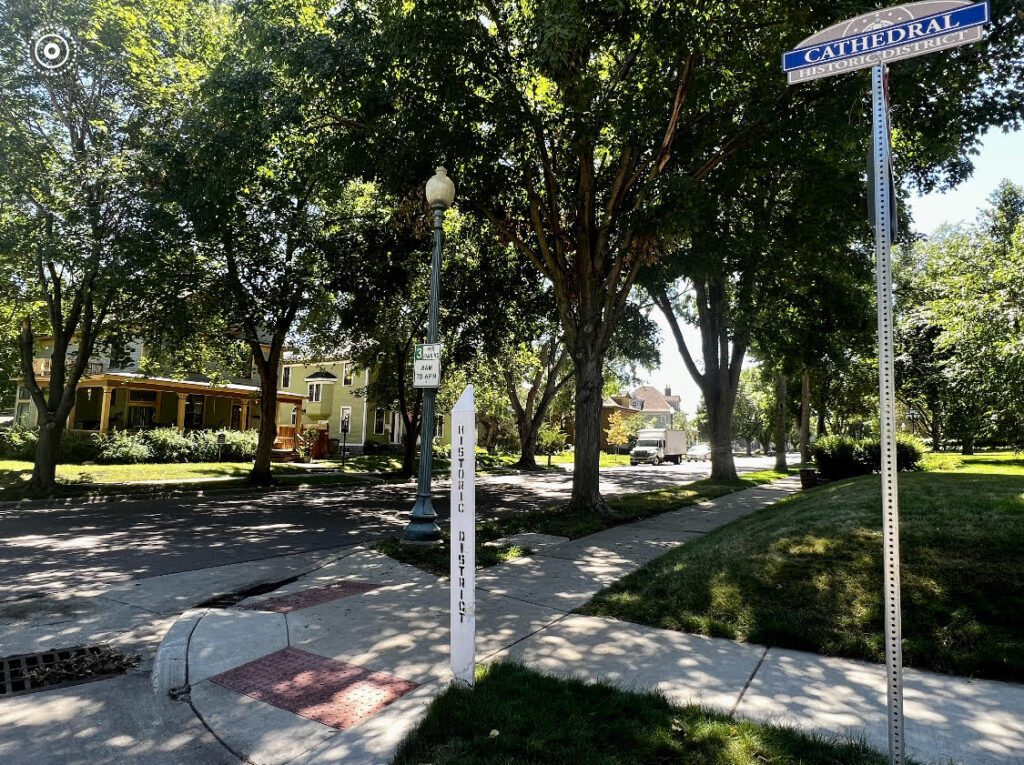
Danielle Bloom was searching for three things while hunting for a home: history, inclusivity and charm. The Cathedral Historic District near downtown Sioux Falls fit the bill.
The 28-year-old working in health care administration is one of several young professionals flocking to and reshaping the Cathedral neighborhood in recent years.
Such an influx is changing not only the look of the neighborhood — from one with older generations who had lived in the area for decades to a younger demographic — but also shifting it to a community focused on involvement, celebrating its history and encouraging engagement with neighbors.
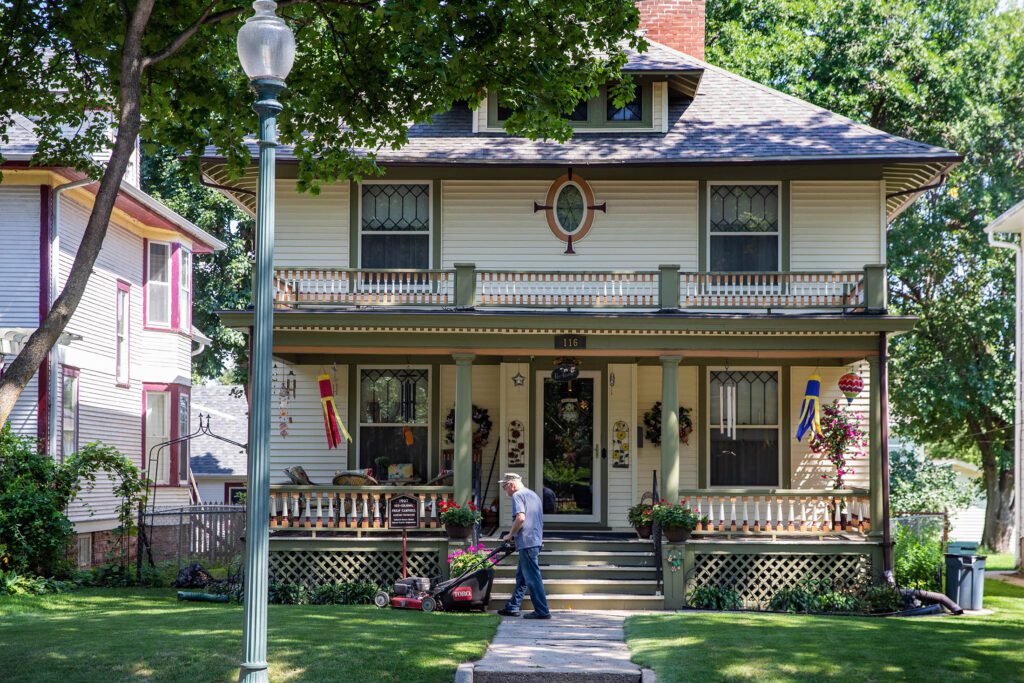
“It’s a cool mix of people,” Bloom said. “There are the people who have been here a long time who love sharing their stories about the houses and neighborhood, and then the people who are new here who love to hear those stories.”
Bloom, who is originally from Madison, Wisconsin, but graduated from Augustana University in 2018, moved back to Sioux Falls in 2020. She started looking to purchase a home because she was tired of paying rent.
She put in eight offers before she landed her Cathedral Historic District home, which she lives in with her partner and younger brother. Her search took nearly 10 months.
And while she was smitten with the Cathedral District’s historical charm and mission, it’s the community that she has fallen in love with. Events and programs put on by the neighborhood association help her engage with her neighbors, in addition to those who will stop by and chat with her family while sitting on their front porch in the evening.
The Cathedral Historic District Neighborhood Watch Group holds a host of events, including book clubs, potlucks and woodworking clubs. It also has a newsletter to share information about the area and renovation efforts, said Lura Roti, who is among a group of volunteers who sit on the neighborhood leadership committee.
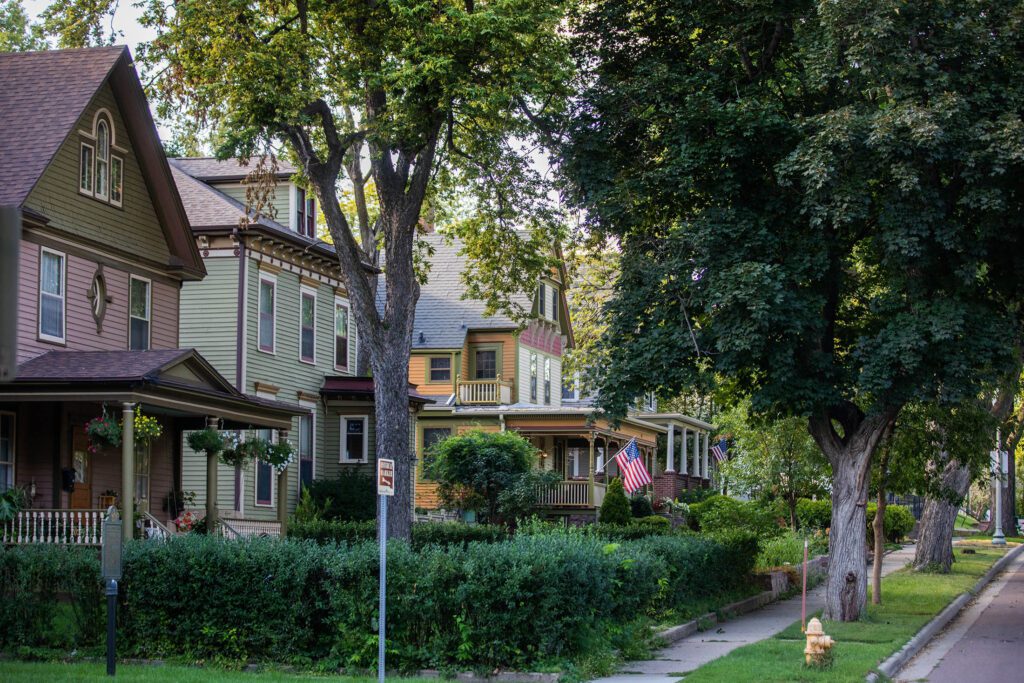
“It’s like its own small town,” Roti said, adding that the neighborhood is reminiscent of the small South Dakota town she grew up in. “Everyone helps each other out here.”
And that small-town feeling of engagement and connection didn’t just happen naturally — it was through the coordinated effort to bring neighbors together in events like the book club and potlucks.
New developments that don’t have such neighborhood associations might still know their neighbors, but not in the same way through such associations like in the Cathedral District, said Diane de Koyer, neighborhood and preservation planner for the city of Sioux Falls.
“People are investing in the core areas, which has a lot to do with historic preservation interest but also the neighborhood associations,” de Koyer said.
Roti has lived in the Cathedral Historic District for about 15 years, watching it change in that time. When she and her husband moved in, they were one of the youngest families in the area, and their daughter was one of the few young children born in the area around the time, she said. Now, they’re surrounded by families around the same age and with almost a dozen children their daughter’s age.
The draw for many families moving into the area are the same as Bloom’s, Roti said, though affordability and access to downtown Sioux Falls play a factor as well.
For instance, Roti referenced a friend who had to move out of her downtown Sioux Falls loft this year because her apartment rent increased by about 30 percent after the lease was up. Finding a home or unit in downtown Sioux Falls with several rooms for a growing family is simply out of reach for several in Sioux Falls.
“That’s not an isolated incident,” Roti said. “Housing in the Cathedral District remains affordable for residents, and I think that might be why more young professionals are moving here.”
But it’s not just accessibility to downtown Sioux Falls, since several neighborhoods surround downtown in the same cost range. It all comes back to the community and the historical charm, Bloom said.
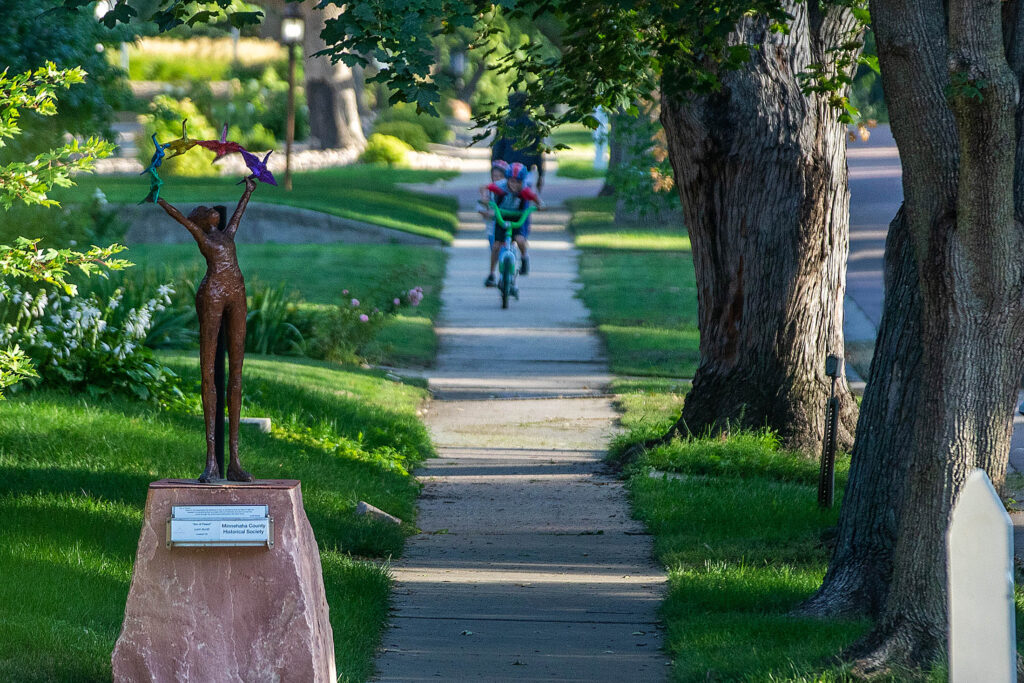
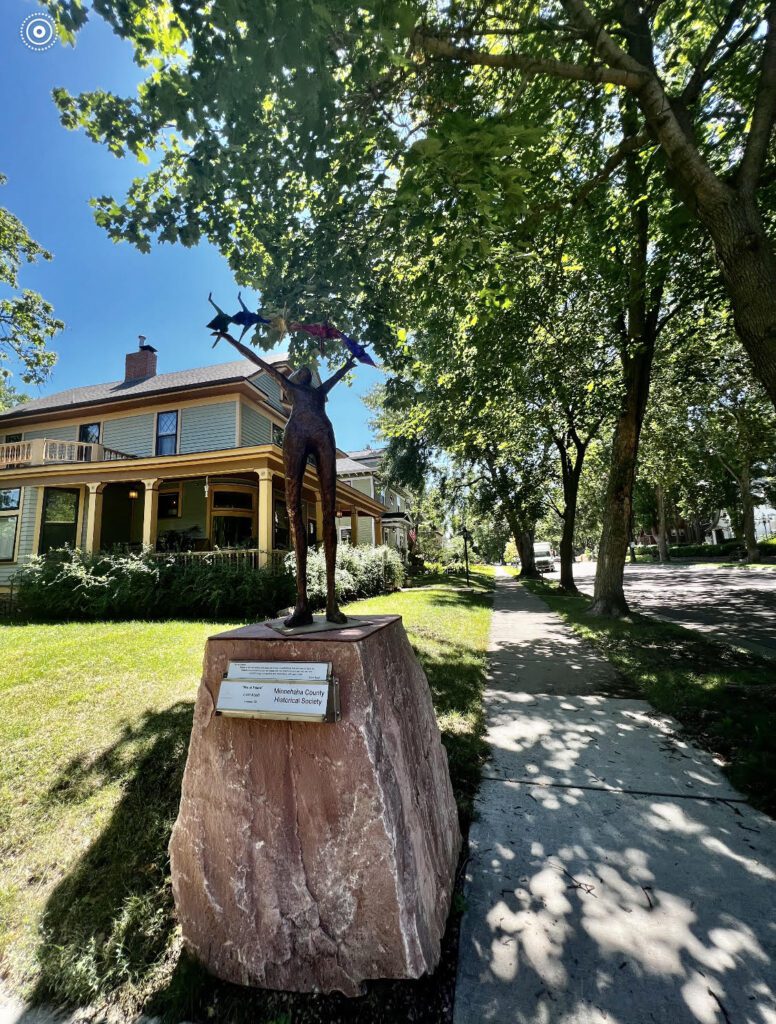
The area is well known for its recognized and preserved historical housing. Markers stand outside many homes identifying when the house was built and who was the home’s first owner. Several of the homes also come with inherited history that has been collected and preserved by former homeowners.
Bloom herself has a set of letters, pictures and information about her home that was passed down to her. She hopes to frame and display the work for visitors.
“Another reason I do love this area is that people love their homes, and you can tell that by having a conversation with them,” Bloom said. “They truly love and care about this area, and they’re excited about younger people moving here.”
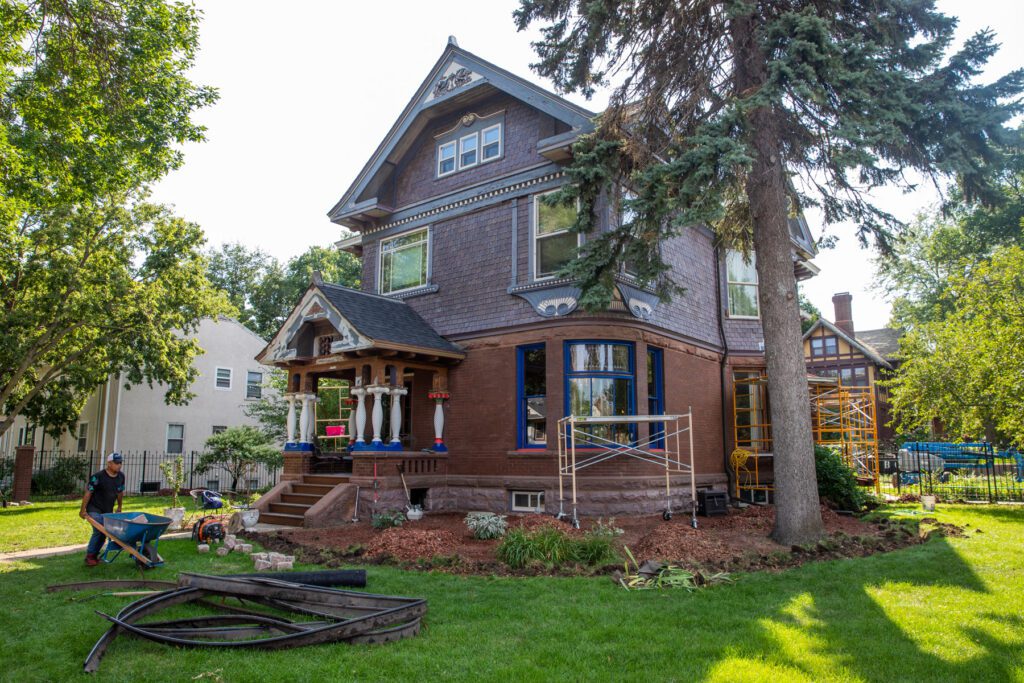
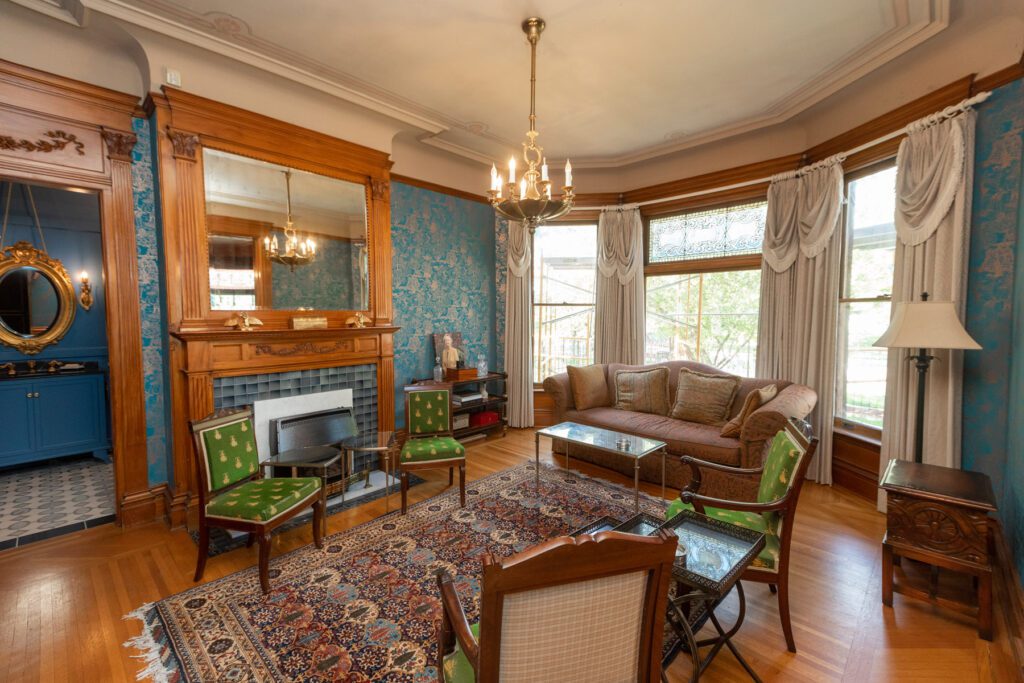
Bob Trzynka, a 45-year-old lawyer, is one of the district’s new neighbors as well. He moved into a historical home with his partner and his mother in 2020, dedicated to renovating the 1883 mansion to its original glory.
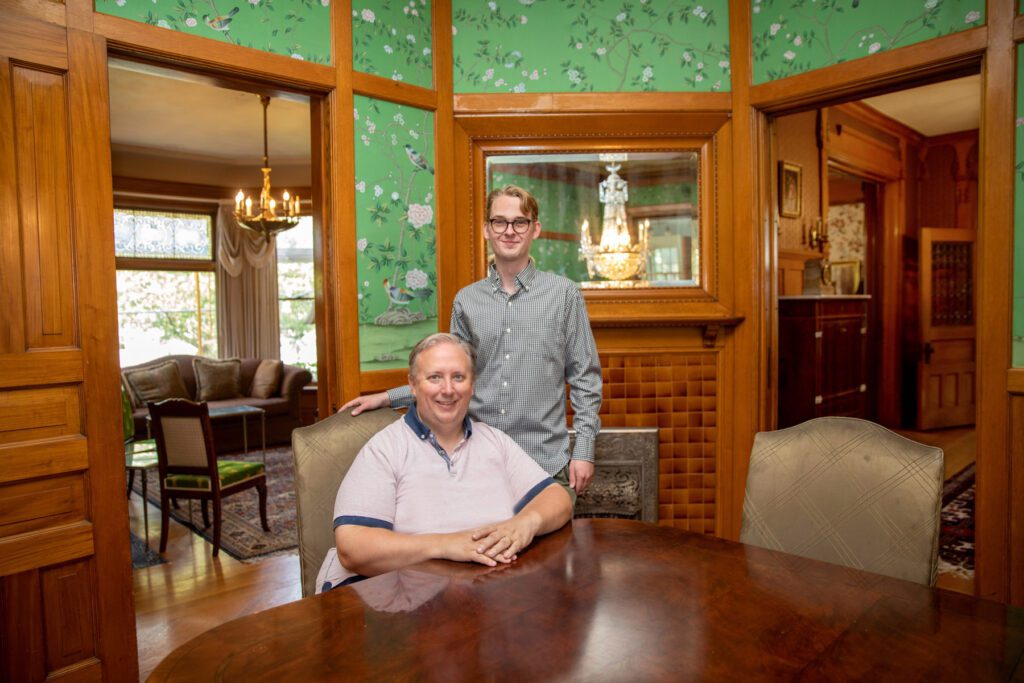
The house near Ninth Street and Duluth Avenue was built by Francis Carpenter, who built the historic Carpenter Hotel in downtown Sioux Falls. The Carpenter family hired Wallace Dow to design it, who also designed the Pettigrew Museum, South Dakota State Penitentiary and Old Courthouse Museum.
The house predates electricity and automobiles in Sioux Falls, so the home has a carriage house and gas lamps converted into electric light fixtures, which Trzynka loves to point out to guests. The house is truly custom made, with craftsmanship and detail in the woodworking and design across the building.
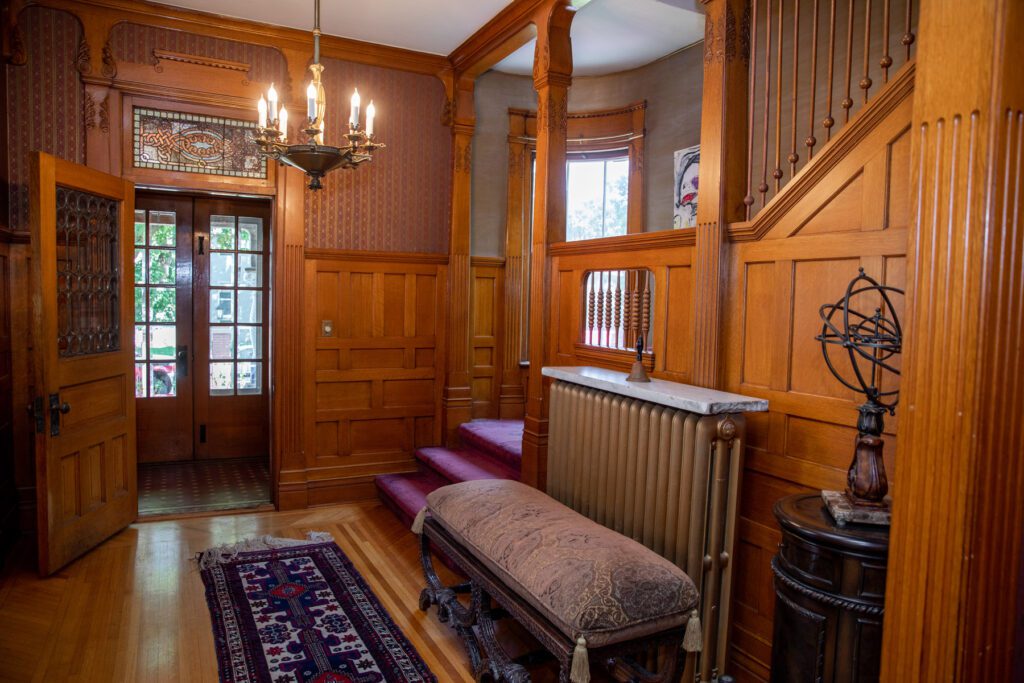
Renovations so far include the property’s Sioux quartzite retaining wall and patio, rebuilding the north porch and arches, restoring the original stained glass and several more indoor projects.
While he had owned a home in the All Saints Neighborhood before and was planning on renovating it before the pandemic, Trzynka believed the house in the Cathedral District was a better investment.
He bought the four-bed, two-bath and 4,182-square-foot house with a carriage house for $330,000 in 2020, which “you just can’t do that anywhere else in this market,” Trzynka said.
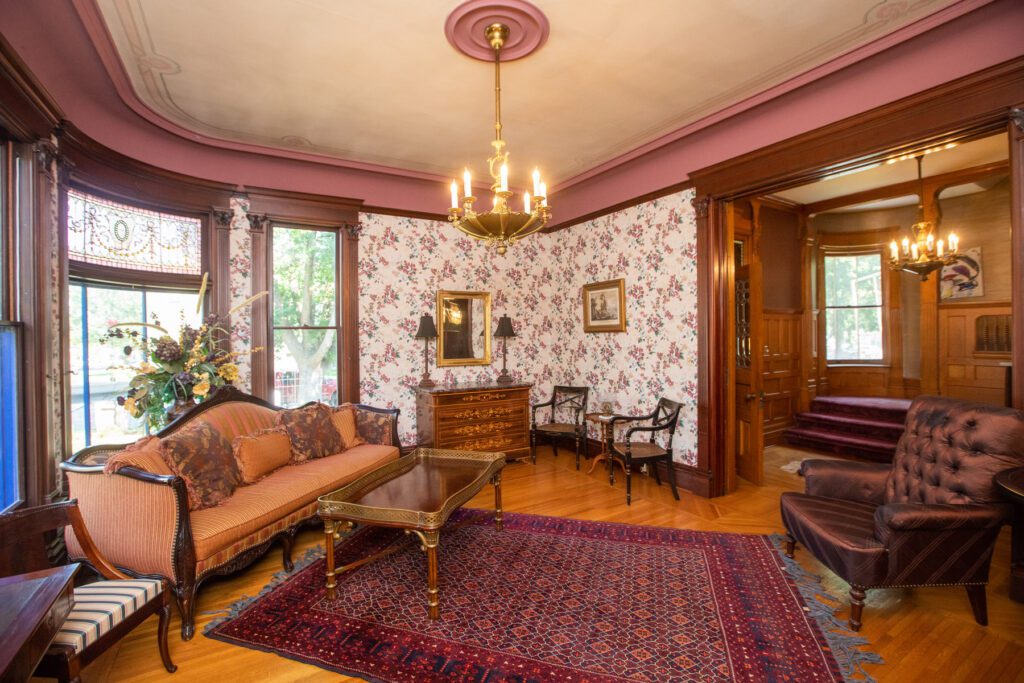
“We’ve already spent more on renovations than we paid for the house, and we’re barely into it,” Trzynka said. “I think it’s a neighborhood worth investing in, both from a family and a financial standpoint, or even a historical standpoint.”
The next phases of renovation include rebuilding the stairs to the second floor and finishing the upper level of the carriage house, among other projects. He’s hoping to get started on renovating the kitchen this winter.
He had considered moving to the district earlier in the 2010s, but he hadn’t felt it was a right move yet. Seeing the influx of families moving into the neighborhood and restoring the homes themselves in the past few years convinced him it was time to join in.
Right now, the neighborhood has a mix of renovated family homes and rental spaces, with some homes split into several rental apartments. Having such a mixture of housing helps ensure the diversity of the neighborhood, Bloom said, and she’d like to see efforts to keep affordable housing in the area as the neighborhood changes.
Several programs are available to property owners, de Koyer said, including housing grants, single-family rehabilitation funding and rental rehabilitation funding. Several people in the Cathedral District qualify based on income to receive grants, she added.
A community forum was held this summer to get neighbors’ feedback on a new use for the Lincoln Elementary grounds. The space is within the Pettigrew neighborhood but also included Cathedral neighbors because it’s nearby.
The space has been vacant for 11 years, de Koyer said, and neighbors are interested in using it for a range of purposes, including community garden space, adding a playground or affordable housing.
“Ideally, we’d like to meet the needs of the neighborhood and what they’re requesting, but we also know there’s more housing that is necessary as well,” de Koyer said. “We are in need of more affordable housing throughout the city, and it’s difficult to find places to build on or relocate homes to. Developers are out there building new construction, but that doesn’t necessarily meet the standards for affordable housing.”
For Bloom, she wants additional housing options in place to encourage a diverse range of people to stay and move into the neighborhood. Because, overall, it’s the sense of community that has strengthened the neighborhood and will keep it strong going into the future, she said.
“The sense of community that I was looking for is just so much greater than we knew,” she said.
Share This Story
Most Recent
Videos

Looking amazing @dtsiouxfalls and @washpav! Thanks to @jpickthorn for capturing an incredible night.
Nov 26

Enjoy this glow headed into Halloween week! 📸: @jpickthorn
Oct 31
Hope you had a wonderful summer weekend and are recharged for the week ahead! 📸: @jpickthorn
Jun 27
Beautiful way to start a week! 📸: @jpickthorn
Jan 10
Favorite flyover of the year! Merry Christmas from our entire @pigeon605news flock. 🎄🐦 📸: @actsofnaturephotography
Dec 24
They definitely deserve to be treated like holiday royalty and they were! ❤️ these scenes from tonight’s lighting celebration at @sanfordhealth Children’s Hospital. 🎄
Dec 1
The holidays are here! Perfect night @dtsiouxfalls
Nov 27
Happy Halloween from @avera_health NICU babies! Link in bio to see more! 🎃
Oct 31
Did you know @dtsiouxfalls is filled with 👻 stories? Link in bio … if you dare 😱
Oct 8
When it comes to kids parties nobody wants to be cookie-cutter. Link in bio for the story on what’s trending.
Sep 28
Want to stay connected to where you live with more stories like this?
Adopt a free virtual “pigeon” to deliver news that will matter to you.





Are you a little bird with something to share?
Delivering news that matters to you
Years ago, homing pigeons were used to bring us news we needed. Today, your virtual “pigeon” will deliver what you want to know about the place you call home.
All pigeons are free to good homes!
Our Partners