Years in the making, replacement organ debuts at Cathedral of St. Joseph
It was Jared Ostermann’s first Christmas as director of music at the Cathedral of St. Joseph in Sioux Falls, and there might not have been a worse time to realize the organ he had inherited needed help.
“If I remember right, two of the keyboards stopped working for Christmas,” said Ostermann, who has held the role for 13 years at the Cathedral, which is both a parish church and the mother church of the Catholic Diocese of Sioux Falls.
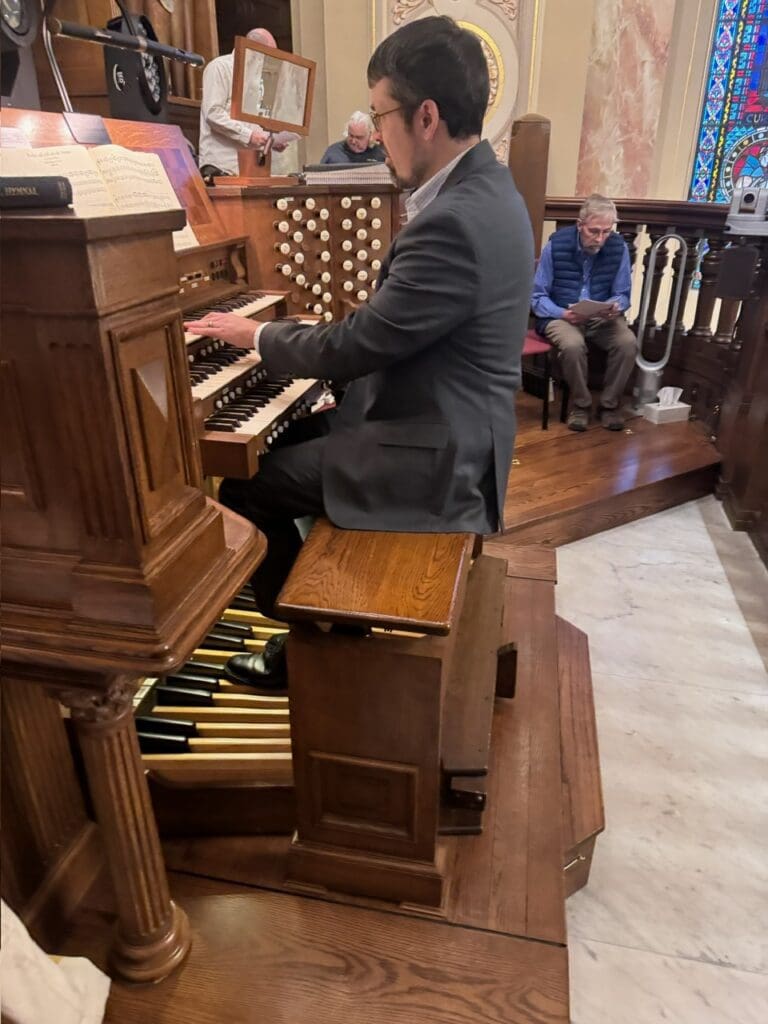
Director of music Jared Ostermann plays on the previous organ at the Cathedral of St. Joseph.
“I remember crawling around Christmas Eve at 3 p.m. trying to get ready for the 4 p.m. service and taping things together trying to make some of it work. So it was pretty clear right from the beginning that something needed to happen.”
The organ, which was built in the late 1980s with the technology of the time, had certain functions that had deteriorated to the point that repair was estimated well into the six figures.

The previous organ was built in the late 1980s.
“One hundred years ago, organ building in North America was very much a factory kind of affair,” said Alex Ross, an organ designer and voicer from Montreal-based Juget-Sinclair Organbuilders.
“They found ways to mass-produce organs, and they weren’t quite as well thought out, so they were typically harder to maintain because they were built so quickly, and artistically they were not necessarily quite as customized to the space as we do now. A lot of churches are realizing an organ needs either a big restoration or to be replaced, and often churches are choosing to replace them with something that is 100 percent made for the space.”
Ostermann began bringing in outside help to assess the Cathedral’s organ in 2015. By 2018, conversations had started about a replacement.
“We had a short list of about five builders. I visited a lot of organs and had a lot of years playing organs by some of these builders … and we settled on two for a short list of proposals, and both were really good,” Ostermann said. “We had an organ committee that helped review the contracts and visited organs by the top two builders as a committee, so it’s been a long collaborative process.”
Juget-Sinclair ultimately was selected for its French tradition of organ building, which ties in with the French architecture of the building and the history of this part of the country before the Louisiana Purchase, “so we felt it was a really good fit to build an organ in that tradition,” Ostermann said.
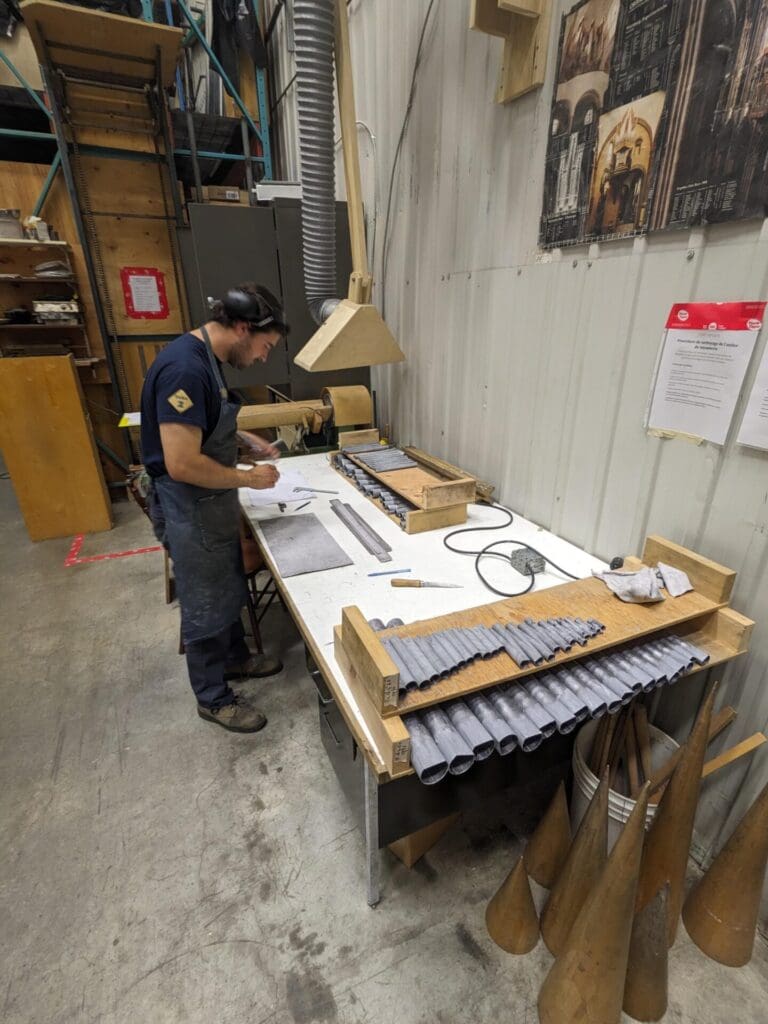
The Cathedral made a $180,000 down payment in 2019 with funds left in a will to support liturgy and sacred music so a spot could be held on the craftsmen’s calendar.
Eventually, the $2 million organ was funded through donations and part of a larger $10 million fundraising campaign at the Cathedral that included renovating the original rectory, which dates back to 1925.
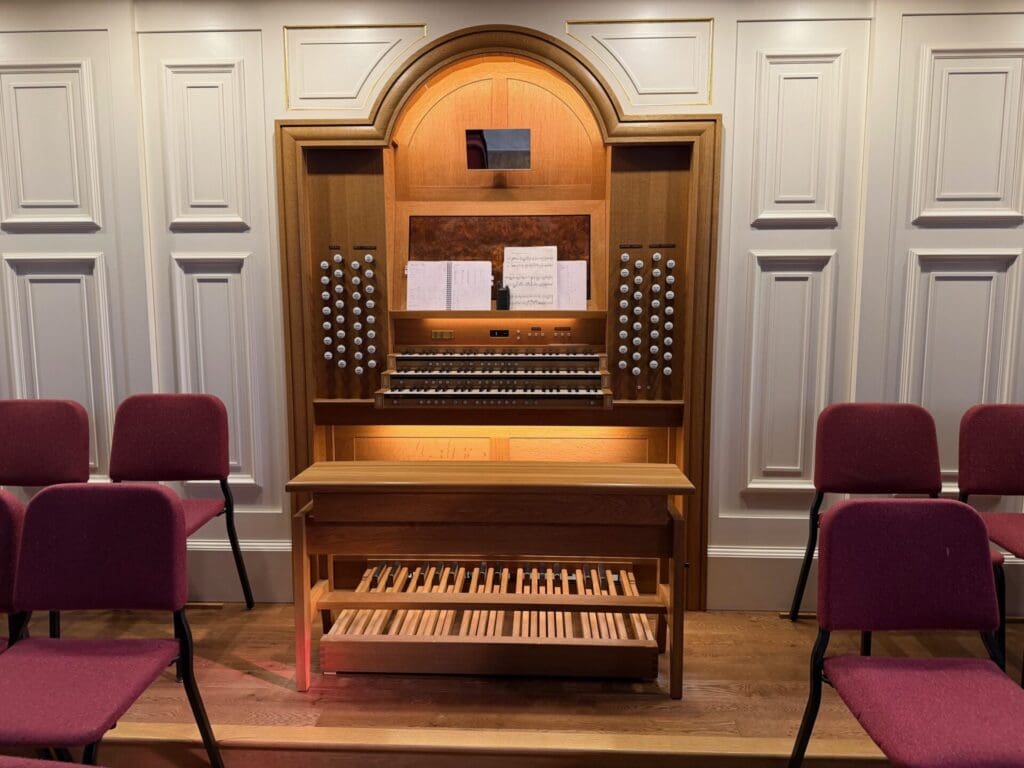
The organ “is completely built from scratch, so it’s a little daunting,” Ostermann said. “It could be anything you imagine in terms of visual design and sound, so it’s a little scary because you make every decision down to the last carving and the smallest and biggest pipe. You have to have a lot of trust and a good working relationship, and we definitely had that with these builders.”

Juget-Sinclair created a design for the organ’s casework that included a small overhang “so some of the pipes are above your head, and it created the floor space for the choir and matched the church architecture,” company president Robin Cote said. “An organ is a mass of 4,000 pipes … and what is unique is we mixed the German culture and the French culture together. It’s like fusion culture, so it can be really, really good or really bad. … We are open-minded, and we like challenges to create different kind of styles.”
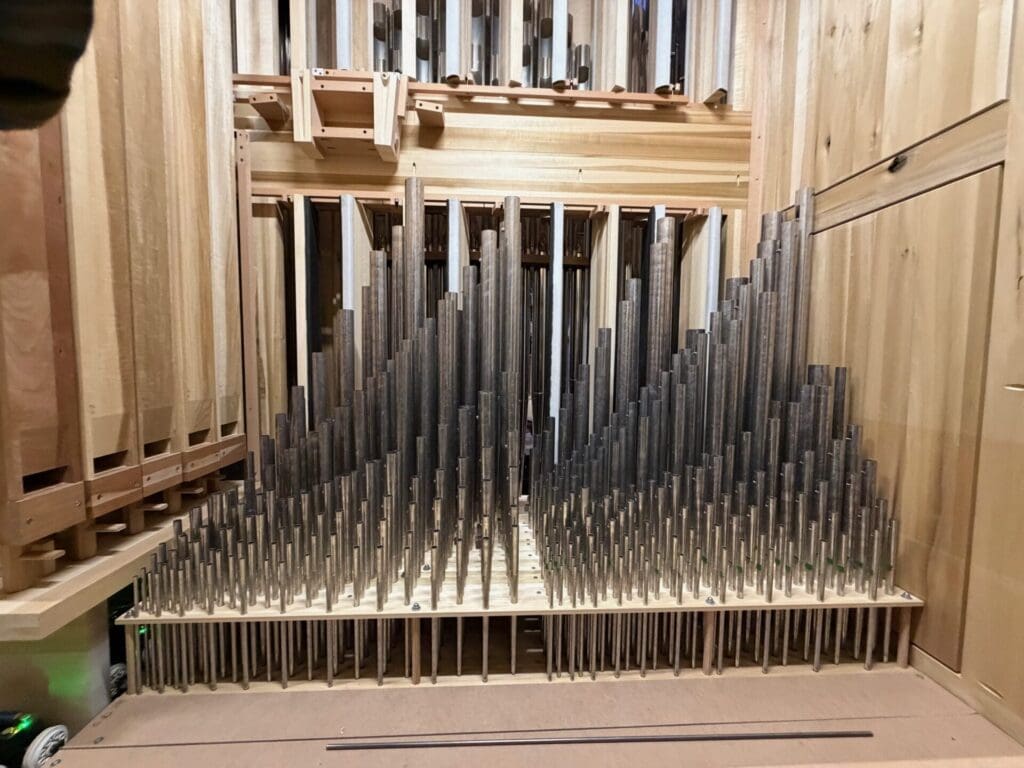
The organ is designed “using simple technology,” he added. “It’s a mechanical key action, so it’s a mechanical link between the keyboard and pipes. In regard to the electrical system, there’s nothing complicated, and it’s not connected to the internet, so there’s no risk of getting a virus.”
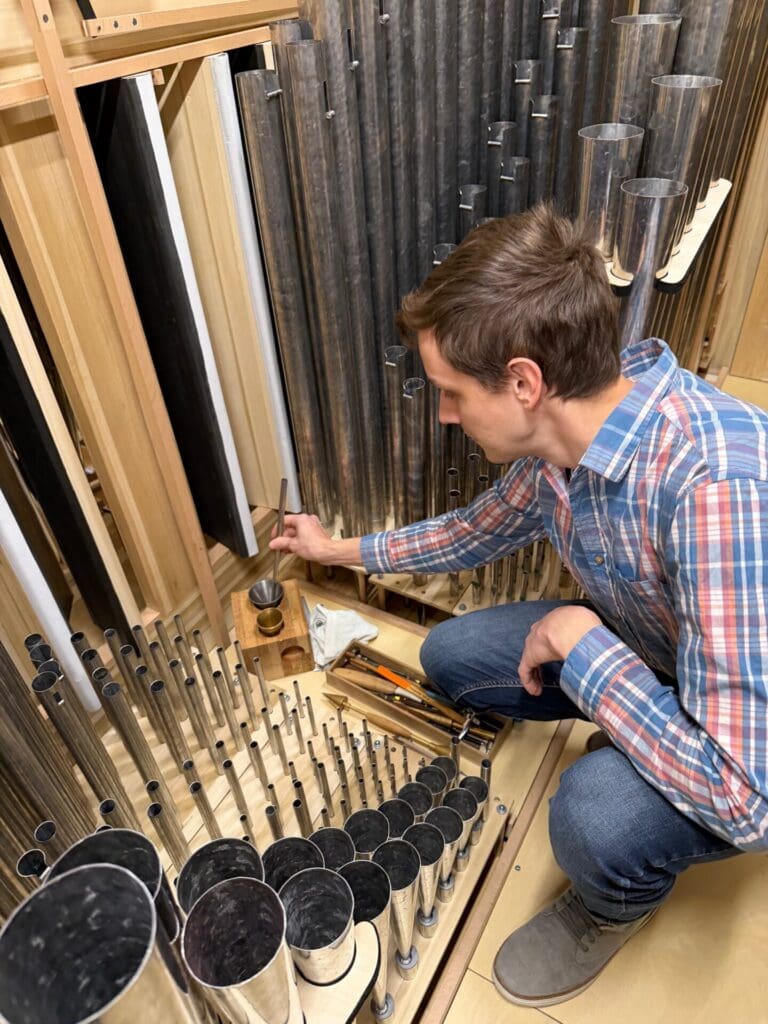
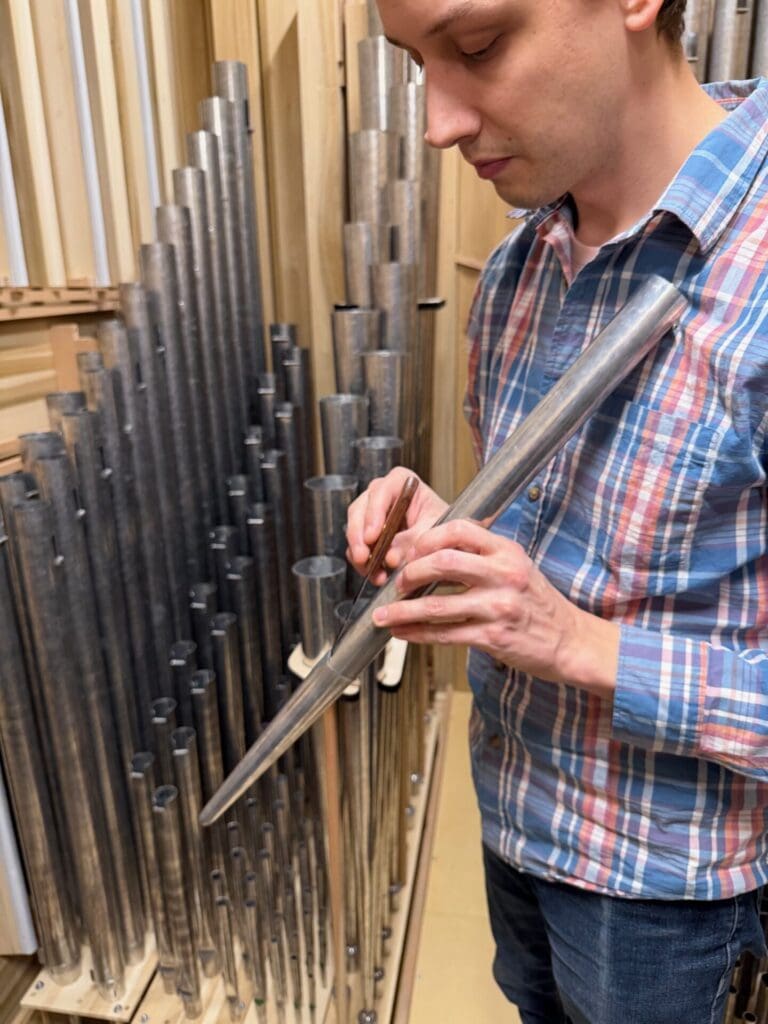
Installing the organ in the Cathedral took three weeks of building, followed by three months of voicing — a process “where the magic happens,” Ostermann said. “They go through all 4,000 pipes, one by one, and make the final adjustments by hand to make sure they’re speaking right in our Cathedral acoustic.”
The team from Montreal lived at the rectory for months while working on the project.
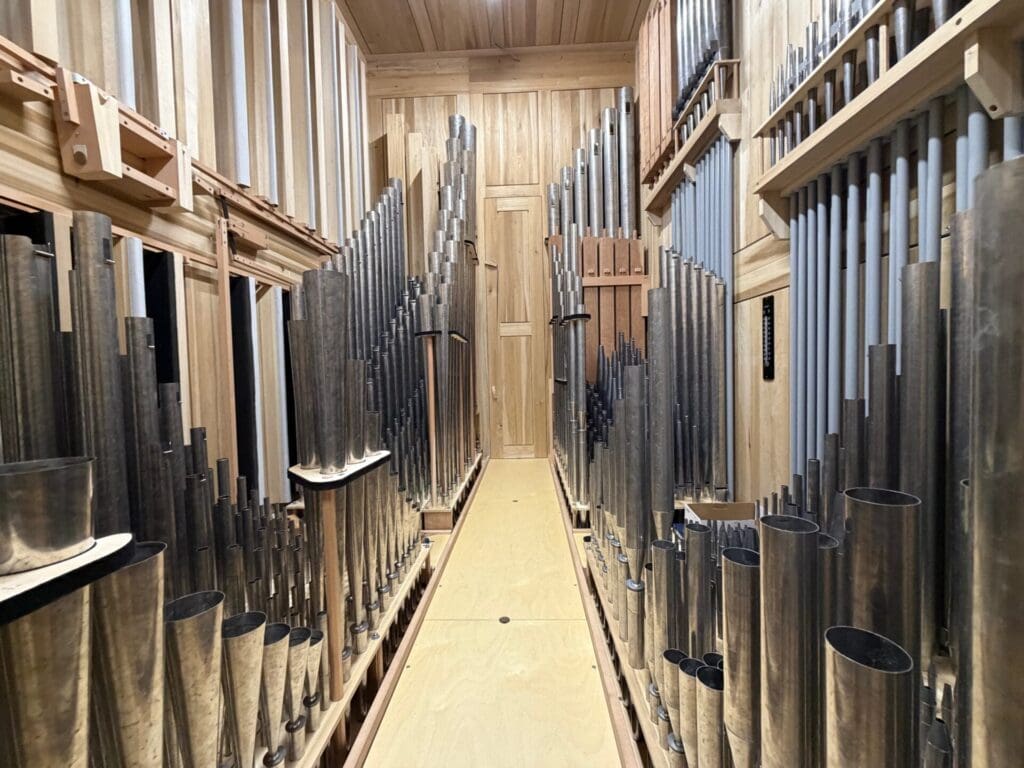
“It’s an installation that really stands out because of the quality of the whole concept. The fit within the Cathedral is amazing,” Cote said. “I think we were really, really inspired from the beginning. When I was walking in that cathedral, it was exciting, and I was amazed by the quality of the work that has been done for the restoration.”
Building an organ from scratch like this “is kind of like making a custom suit,” Ross added.

“You take the measurements, and you design and build the suit, and then you tailor — where we make micro-adjustments (to the organ), and we’re really lucky because the acoustic is so fabulous. It’s like the model who bought the suit goes to the gym and eats healthy. We’re really happy. Every time we hear it, we always say our most recent organ is our best one.”
The Cathedral’s former organ casework and facade pipes are being reintegrated into another instrument in Texas, but most of the interior ended up being disposed.
Now that Ostermann is able to play the new instrument, “it’s something like having a whole orchestra at your fingertips — a whole range of instruments and sounds, from softest to thunderous loud sounds that shake the walls of the Cathedral and everything in between,” he said. “It’s overwhelming. It will take years to really understand it. There’s so many options, basically an infinite number of sound options.”
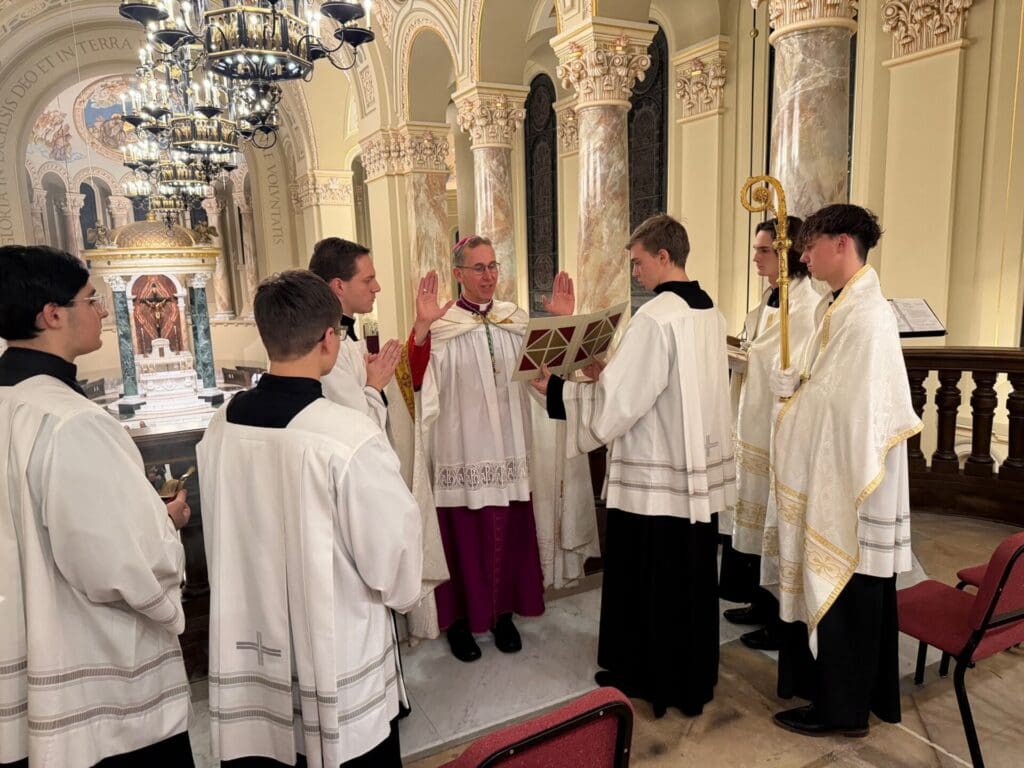
The organ officially was blessed Sunday by Bishop Donald DeGrood.
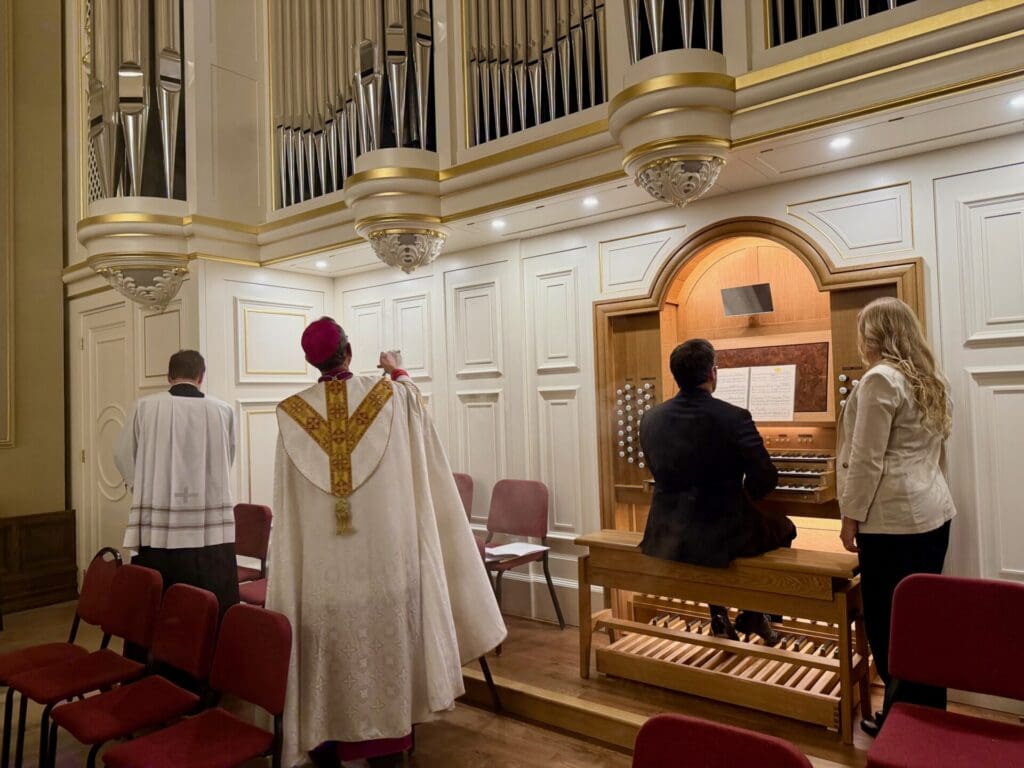
It is being used at Masses in the Cathedral and will be part of this year’s “Christmas at the Cathedral,” which runs Dec. 18-21 and has limited tickets available for the final performance.
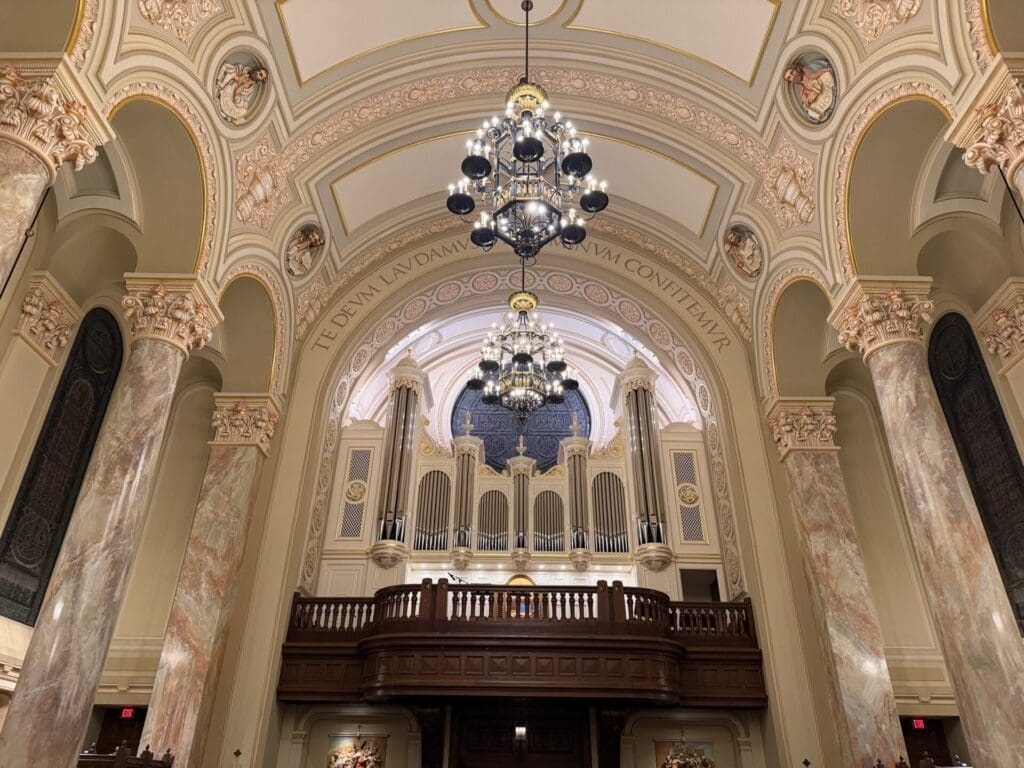
An inaugural concert is scheduled for May 1 as part of the Sacred Arts Series.
“We’ve already heard a lot of comments from the congregation,” Ostermann said. “To the lay person, it’s brighter, it’s more present. Downstairs, it has more leadership qualities for hymns, more beautiful colors. These are all things we’ve heard comments on that stands out even if you’re not an organist.”
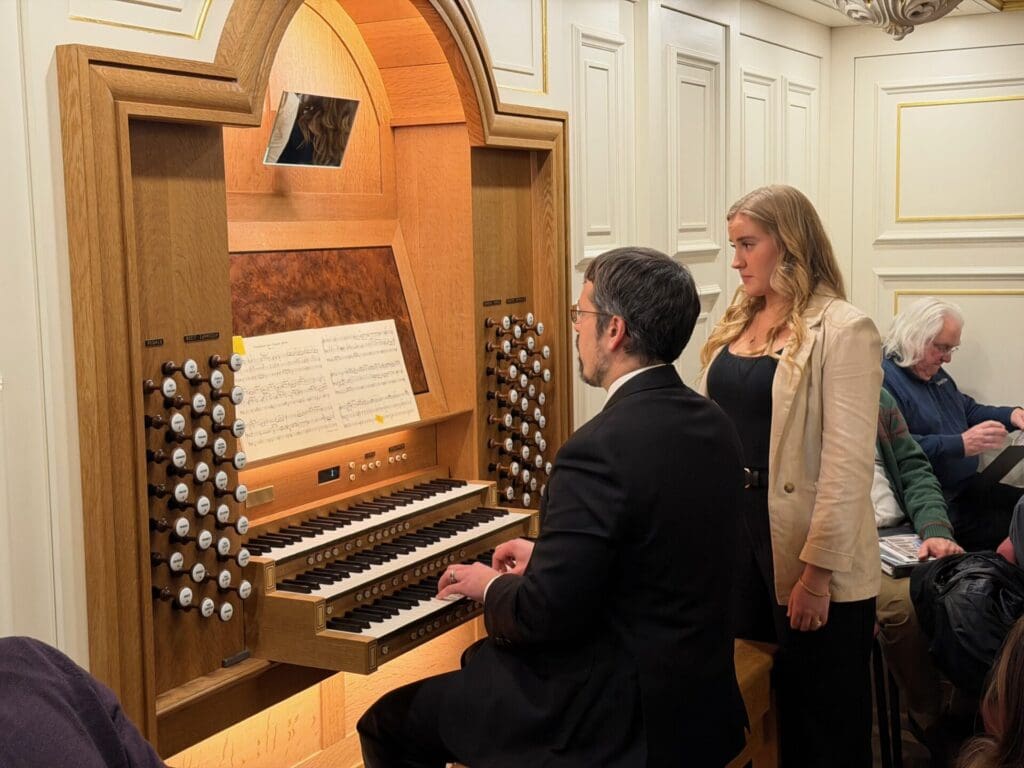
If all goes well, the organ will be heard by generations in Sioux Falls.
“We went to Germany, and I think the oldest organ was from 1715 and still works great,” Ostermann said. “So if you build them right, they should be a historical investment.”
Share This Story
Most Recent
Videos

Looking amazing @dtsiouxfalls and @washpav! Thanks to @jpickthorn for capturing an incredible night.
Nov 26

Enjoy this glow headed into Halloween week! 📸: @jpickthorn
Oct 31
Hope you had a wonderful summer weekend and are recharged for the week ahead! 📸: @jpickthorn
Jun 27
Beautiful way to start a week! 📸: @jpickthorn
Jan 10
Favorite flyover of the year! Merry Christmas from our entire @pigeon605news flock. 🎄🐦 📸: @actsofnaturephotography
Dec 24
They definitely deserve to be treated like holiday royalty and they were! ❤️ these scenes from tonight’s lighting celebration at @sanfordhealth Children’s Hospital. 🎄
Dec 1
The holidays are here! Perfect night @dtsiouxfalls
Nov 27
Happy Halloween from @avera_health NICU babies! Link in bio to see more! 🎃
Oct 31
Did you know @dtsiouxfalls is filled with 👻 stories? Link in bio … if you dare 😱
Oct 8
When it comes to kids parties nobody wants to be cookie-cutter. Link in bio for the story on what’s trending.
Sep 28
Want to stay connected to where you live with more stories like this?
Adopt a free virtual “pigeon” to deliver news that will matter to you.




Are you a little bird with something to share?
Delivering news that matters to you
Years ago, homing pigeons were used to bring us news we needed. Today, your virtual “pigeon” will deliver what you want to know about the place you call home.
All pigeons are free to good homes!
Our Partners