

Where law enforcement, mental health specialists intersect, ‘it does make a difference’
By Steve Young, for Pigeon605
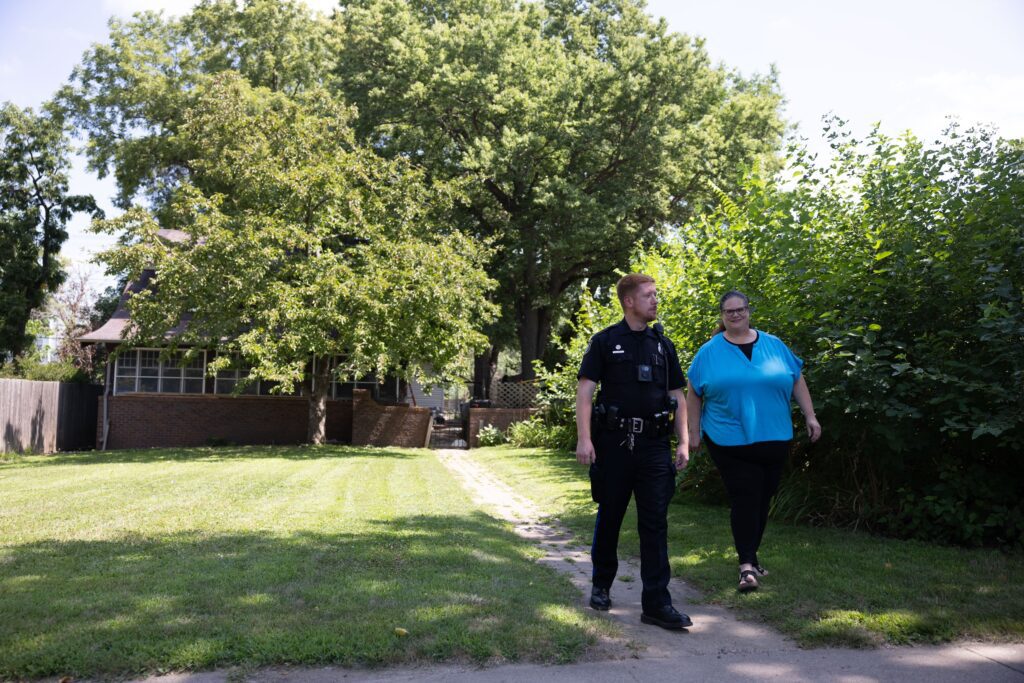
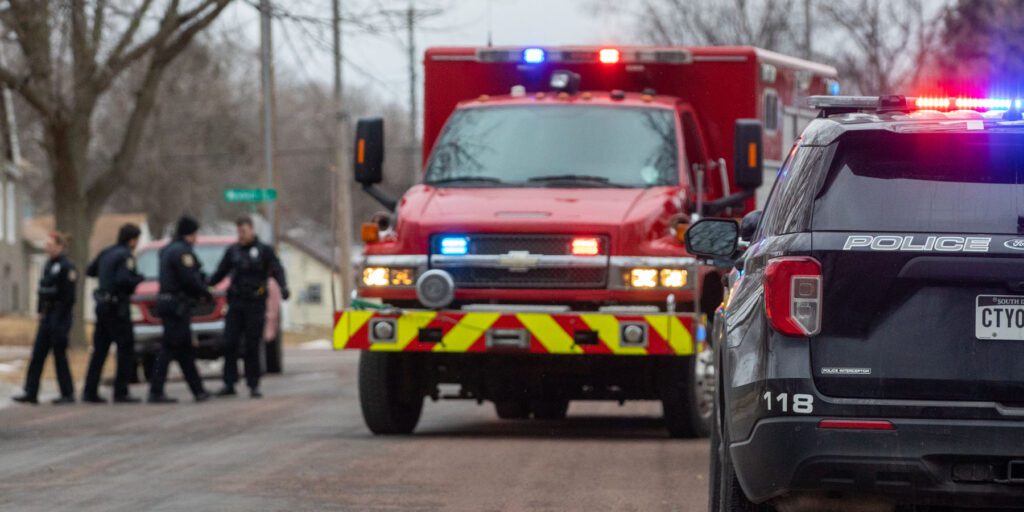
It had been a routine call, a stop at a hotel this summer where Sioux Falls Police Officer Dane Chernock sat in the parking lot as his partner with Southeastern Behavioral Health checked on a client.
A woman randomly approached Chernock as he waited. “She was having delusions,” he recalls. “Just some indicators that she was having some kind of low mental health crisis.”
The moment passed. But the next day, Chernock shared the experience with Kim Hansen, director of community support services at Southeastern. Together, they went back to the hotel, found the woman and steered her life onto a better path.
“Kim got her set up through the homeless outreach program. Even got her some sort of housing,” Chernock said. “I thought that was great.”
Such outcomes aren’t always the rule when police and people in mental crisis interact. Every year in America, 2 million jail bookings involve individuals with serious mental illness. The Washington Post reported last year that 104 people were killed in 2021 across this country after police responded to reports of someone behaving erratically or having a mental health crisis.
Sioux Falls isn’t immune from those situations. Hansen said more people are moving into the community from different areas of the country and bringing mental health issues with them. Drug use has fueled an increase in mental health calls as well, she said. “And some of it,” she added, “is just people who are newly diagnosed who have not been connected to services.”
Fortunately, the city has been proactive in addressing the issue. The creation in the past few years of the 988 Suicide & Crisis Lifeline has helped tremendously, Chernock said. Operated by the Helpline Center, callers in crisis can talk on the telephone to counselors with advanced degrees and experience in behavioral health who are able to help them deescalate their situations and create safety plans.
On average, 80 percent of calls received by 988 crisis counselors are resolved on the phone, reducing the need to dispatch law enforcement.
“If 988 and the person on the phone haven’t reached an agreement on a safety plan, then 988 will call the police department,” Chernock said. “But they’ve been a great resource in triaging mental health calls for service. I’ve noticed that a lot of those calls to us have gone down.”
Another tool in the work with mental health crises is Southeastern Behavioral Health’s Mobile Crisis Teams, which have been operating since 2011. Police working the streets who establish probable cause for an individual to be placed on a mental health hold can call a Mobile Crisis Team to the scene for assistance, said Jason Leach, an operations lieutenant with the Police Department.
MCT counselors are able to decrease the impact of mental health emergencies by showing up quickly and deescalating what often are tense situations. Once on scene, they can assess the individual, create a safety plan for him or her right there, and eliminate unnecessary hospital admissions.
“We understand that a fully dressed officer in a uniform with a patrol car can amp that level of tension up a little bit,” Leach said. “I think a lot of us see the officer’s role as like, ‘Hey, I’m just going to make sure the scene is safe, introduce what’s going on here and then kind of step back and let the mental health professional take over and do a lot of the talking, a lot of the de-escalation.’ ”
Mobile Crisis Teams answer about 200 calls a year, and afterward, “a little over 90 percent of those individuals are left in place with safety plans so they can go about their lives,” Hansen said. That means individuals go back to their homes, to their jobs, to their regular routines ̶ often with referrals for additional help, but without the trauma of being transported to a hospital on a mental health hold.
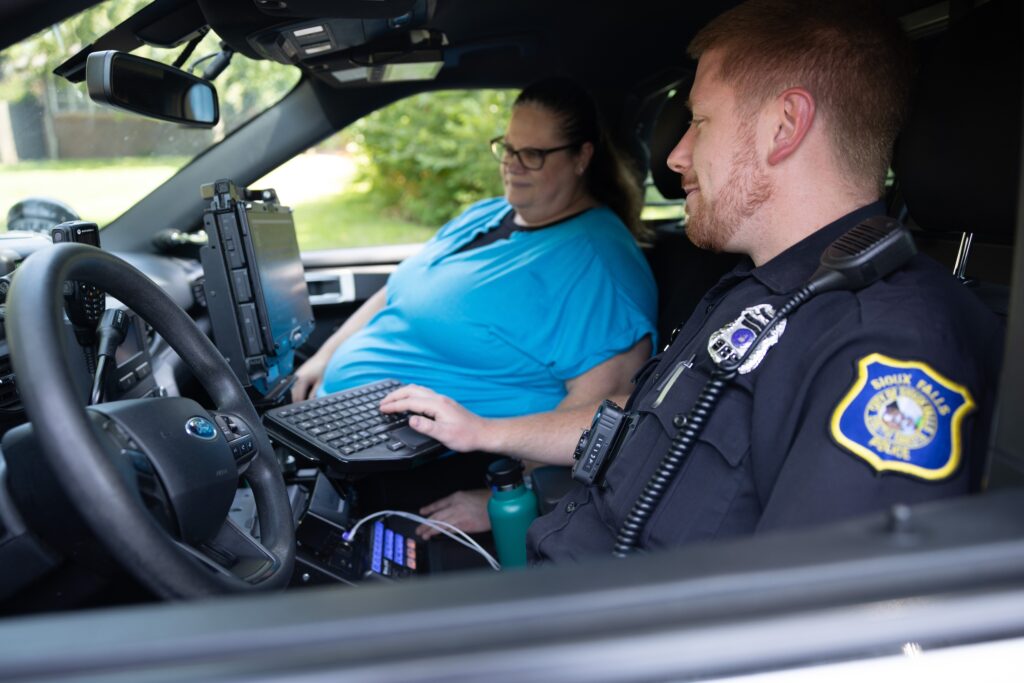
In a similar vein, the Police Department and Southeastern embarked on a pilot project three years ago to put officers and mental health specialists together in police cars. It’s not a new idea ̶ communities across the country have taken up what they call this co-responder approach. Sioux Falls in fact sent teams to Tucson, Arizona, and Wichita, Kansas, to study those efforts.
As staffing remains an ongoing issue for the Sioux Falls Police Department, it decided to implement the co-responder program here by using school resource officers during the summer when school is out. For three months in 2022, 2023 and this summer, an officer has ridden with a Southeastern mental health specialist from 8 a.m. to 4 p.m. Monday through Friday.
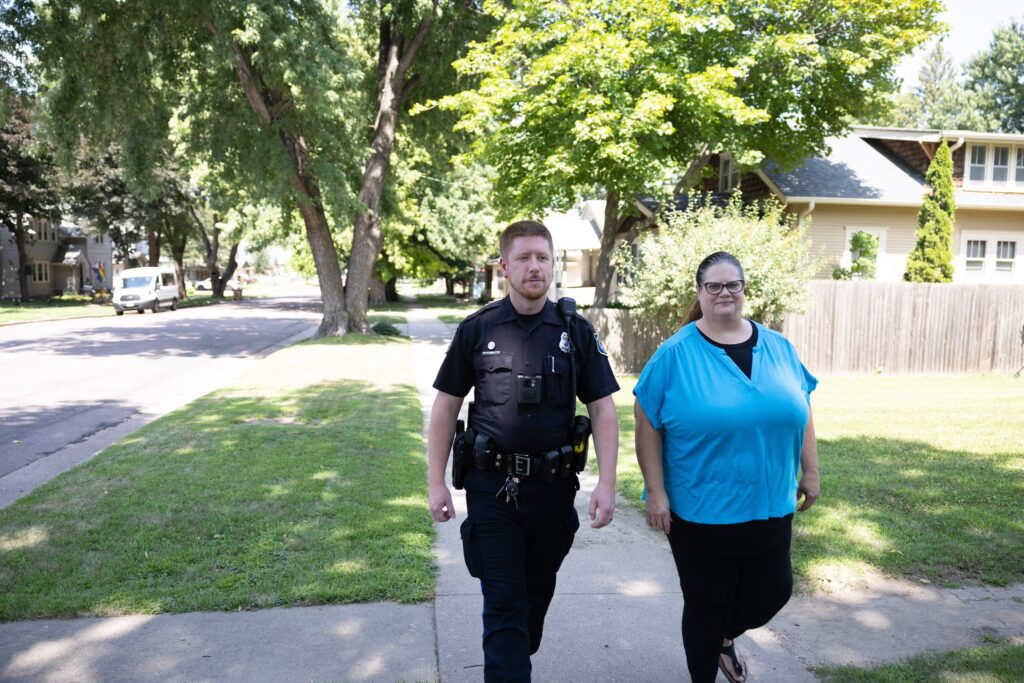
Chernock has worked the police end of that pairing this summer. He and the counselor’s sole responsibility is to respond to mental health calls. It’s common, he said, for those calls to involve individuals who want to talk about suicidal ideations they may be having or are going through a manic episode or a bout of schizophrenia ̶ most of which don’t meet the criteria for a mental health hold.
“From my experience, these situations are people who just want to be listened to,” Chernock said. “And being a Crisis Intervention Team officer, you use your training to determine that.
“So if this person is OK, you can set the safety plan on-site with the assistance of Southeastern now. They’re a great asset to have to work with because they’re more trained on the mental health aspect than I am. They might be able to remedy something on the scene faster or more adequately than I can.”
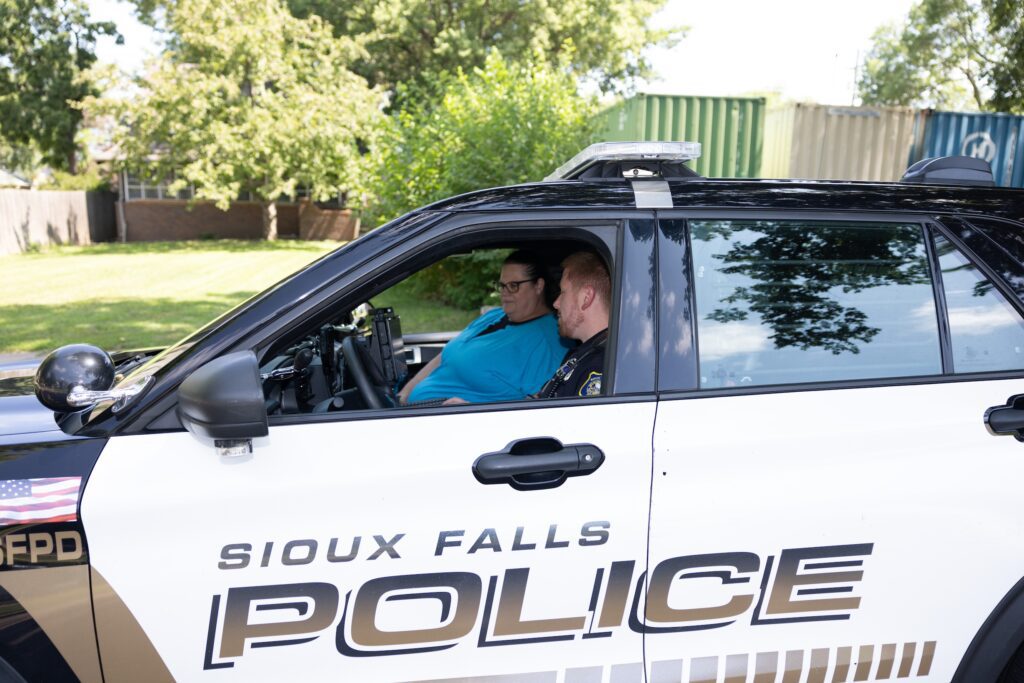
Riding with a mental health specialist has other benefits for officers, Leach said. By interacting with those specialists throughout the day, “they learn from them, engage with them and take those tidbits back to their daily work,” Leach said of the officers. “So even when Dane goes back to school, yes, we’re dealing with juveniles in the schools, but there’s a lot of mental health issues in the schools too. And so how he can employ what he learns as a co-responder and can work with that is great.”
Of the calls the co-responders have answered this summer, Hansen said 77 percent have been acute mental health-related cases. And of that 77 percent, 45 percent were individuals who needed reengagement services or new services.
“And we see that those individuals are following through” on availing themselves of those services, she said. “Definitely, it’s been making a difference.”
In the combined summers of 2022 and 2023, the co-responders went to 230 calls, Leach said. Of those, 129 individuals, or 56 percent, were treated in place or provided a follow-up appointment.
“They weren’t taken to jail. They weren’t taken to Avera Behavioral Health. And actually, just over 1 percent of the individuals we contacted went to jail,” he said. “We found that having these professionals in the car together, working together, they were able to come up with unique resources for people and outcomes so the individuals didn’t end up in jail. So that’s been really good.”
The co-responder unit also benefits the Police Department by freeing up officers for other calls. It’s typical for two officers to show up to police calls, Leach said. A lot of times, the co-responder unit is able to release the other officer from staying. Of the 230 calls the co-responders went to in 2022 and 2023, there were 213 other police units that were diverted from going to those calls.
“So,” Leach said, “it’s been very beneficial in that regard.”
What also makes the co-responder pairing successful is the information and insights each participant brings to the work, he said. The police may have certain information in their systems about individuals they encounter. Southeastern Behavioral Health may have dealt with those individuals too.
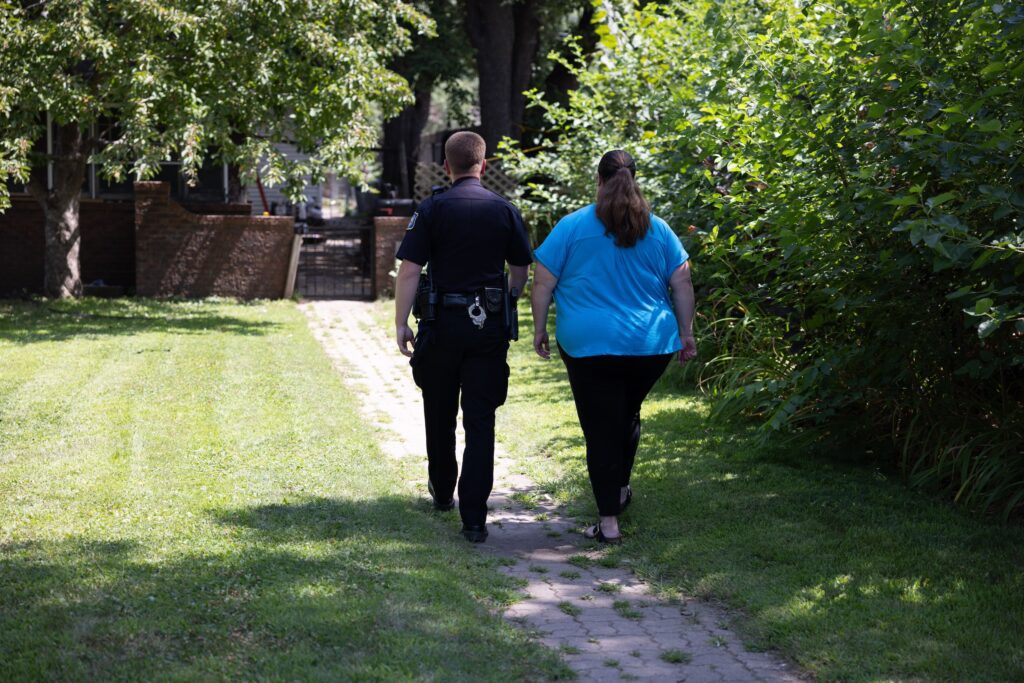
“So when we’re going to interact with somebody, Kim might know that this individual missed their appointment with their counselor last week. Or ‘Hey, they didn’t stop and pick up their meds last week,’ ” Leach said. “So it’s like when they encounter the individual, they can bring that up. ‘Hey, let’s get you in for your appointment now. Let’s have you stop down this afternoon, and we’ll get you your meds.’ The average officer would never know that information. So there is a huge advantage to having those counselors.”
Hansen said they had a situation a summer ago where the co-responders stopped to follow up with an individual near 10th Street and Phillips Avenue. After pulling over, “the next thing we know, we’ve got a line of people lined up. And we hear them saying, ‘Hey, this is the unit that helps people.’ That was interesting to see.”
The co-responders also have been able to form connections with individuals who have had long-term illnesses in the community ̶ people who traditionally have been difficult to engage but now are being connected to services, she said.

They’ve had success with individuals new to the community too, Leach said. He recalls a story from last summer about the co-responders stopping to help an individual holding up a sign that read “Anything helps.”
“That wasn’t a call for service. It was just, ‘Hey, we’ve got time. Let’s just check in with this individual and see what we can help with,’” Leach said. “I believe it was an ID issue. They didn’t have an ID. They didn’t have their driver’s license or ID card. And that’s an area where Southeastern Behavioral Health can help people facilitate that.”
In fact, they helped that woman get an identification card, Hansen said. She then went on to find a job, become permanently employed and get an apartment.
“Sometimes, people just don’t know where to look for the resources,” Hansen said. “They don’t know where to start. We don’t know what their situation is. Some of them may be new to town. Or they may not be new to town, but they had trauma. Or different instances that have occurred in their life where they just have difficulties. They may have a struggle with mental health where they are fearful of who to connect with. Or how to find services to help them.”
The co-responder unit is a great solution in those situations, Leach said. His hope, the Police Department’s hope, is that they can expand the program past just the summer months and make it 40 hours a week all year long.
He sees the potential to get to that point in the next year or two. But the co-responder unit is likely to remain a summer-only venture through at least next year. “Obviously, staffing is a big need throughout the department in various sections,” Leach said. “So to add a new program when you are short various things you have established and need to get back up to a certain standard, well, adding new things is difficult to do.”
That said, the program is working, he, Chernock and Hansen insist. That is confirmed again and again when they find themselves assisting a person who has a mental health condition.
“When somebody is experiencing homelessness, they’ve probably had a lot of trauma in their life,” Hansen said. “When that happens, those individuals find it very difficult to trust people. So to build that rapport, build that connection, get them to trust so that you can gain enough information to know how to help them, that’s really important.”
Having a counselor in civilian clothes who knows the language and the nuances of mental health is really important too, Chernock said. It’s evident to him every time they answer a call, especially when the person in crisis sees his uniform and his police car, “and immediately there is a wall that goes up.”
It’s a wall, he adds, that just as quickly disappears when they see the mental health counselor step out of the car.
“They certainly tend to quickly gravitate toward the other half of us,” Chernock said. “I really like that. It does make a difference.”
Share This Story
Most Recent
Videos
Looking amazing @dtsiouxfalls and @washpav! Thanks to @jpickthorn for capturing an incredible night.
Nov 26

Enjoy this glow headed into Halloween week! 📸: @jpickthorn
Oct 31
Hope you had a wonderful summer weekend and are recharged for the week ahead! 📸: @jpickthorn
Jun 27
Beautiful way to start a week! 📸: @jpickthorn
Jan 10
Favorite flyover of the year! Merry Christmas from our entire @pigeon605news flock. 🎄🐦 📸: @actsofnaturephotography
Dec 24
They definitely deserve to be treated like holiday royalty and they were! ❤️ these scenes from tonight’s lighting celebration at @sanfordhealth Children’s Hospital. 🎄
Dec 1
The holidays are here! Perfect night @dtsiouxfalls
Nov 27
Happy Halloween from @avera_health NICU babies! Link in bio to see more! 🎃
Oct 31
Did you know @dtsiouxfalls is filled with 👻 stories? Link in bio … if you dare 😱
Oct 8
When it comes to kids parties nobody wants to be cookie-cutter. Link in bio for the story on what’s trending.
Sep 28
Want to stay connected to where you live with more stories like this?
Adopt a free virtual “pigeon” to deliver news that will matter to you.
Read More





Are you a little bird with something to share?
Delivering news that matters to you
Years ago, homing pigeons were used to bring us news we needed. Today, your virtual “pigeon” will deliver what you want to know about the place you call home.
All pigeons are free to good homes!
Our Partners