

Putting a face to eating disorders in a state that lacks resources
By Jill Callison, for Pigeon605
One by one, Jen Hinker pasted the words on the right side of her face.
Eat.
Bulimia.
Isolation.
Depression.
Slowly, word by word, that half of her face began to disappear.

Chubby.
Purge.
Scale.
Silence.
By the time Hinker finished, half of her skin had vanished under dozens of carefully chosen words.
Then, she stepped in front of her camera and took a photograph.
Next, she posted that image along with several others on her Facebook page.
The Woonsocket woman had shared her history of struggling with an eating disorder before in a Facebook post she now describes as vague. This spring, however, Hinker was willing to be explicit about her journey away from and back to healthy eating.
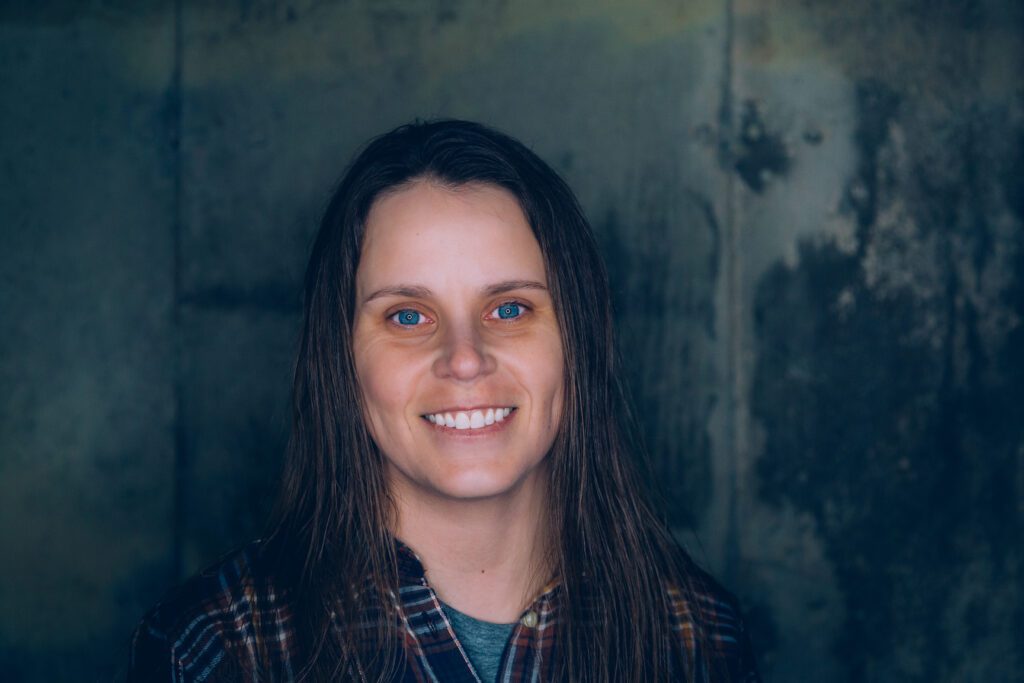
“I just want people to know they’re not alone,” she said. “There’s more awareness of eating disorders, but it can get swept under the rug and not taken seriously. It’s very, very common, even if people don’t get to the extreme I took it to.”
According to information from the National Eating Disorder Association, or NEDA, the three most common types of eating disorders are anorexia nervosa, bulimia nervosa and binge-eating disorder. Eating disorders, particularly anorexia nervosa, where a person’s obsessive desire to lose weight leads them to refuse to eat, have one of the highest mortality rates of any mental illness.
NEDA estimates 30 million Americans have suffered from eating disorders, and scientific surveys reveal one in every seven young women has had an eating disorder. Men also struggle with eating disorders, said Stephanie Klemann, who started a support group that will resume meetings this month after being suspended by the pandemic.
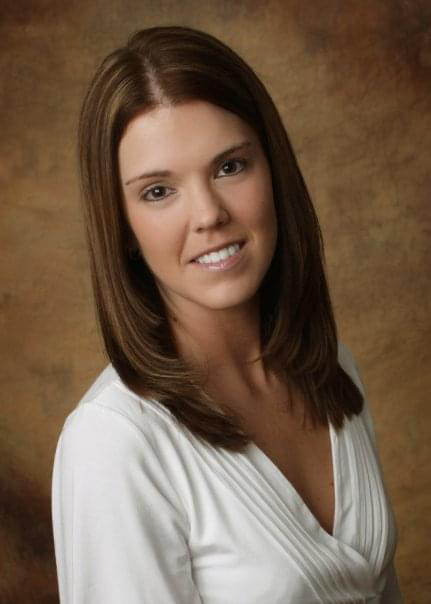
Klemann developed anorexia and bulimia during middle school. She struggled with it throughout high school and college before starting outpatient therapy.
“But outpatient therapy and great family support weren’t enough. It had too great a grasp on me,” Klemann said. “The closest treatment center we could find that my family felt comfortable with was in Wisconsin. I spent about five months there receiving treatment.”
South Dakota still has no residential program for people with eating disorders, according to Mary Dressing, a mental health therapist and registered dietitian with Avera Health.
“We don’t have any resources,” she said. “I have to refer people to out of the state for help. There are a few practitioners in the Sioux Falls area that do see individuals, and I do see some teenage girls that have gone out of state trying to get a peer group together.”
Preliminary conversations with behavioral health specialists have emphasized a need for an in-house treatment program, Dressing said.
Eating disorders fester in secrecy, Klemann added. Her support group offers people a safe place to talk and listen.
“I know for myself, having gone through the disorder and being on the other side of it, that recovery is possible,” Klemann said. “I know how hard it is, but it’s doable. I remember going through treatment and thinking, these people don’t get it. A support group can relate.”
Hinker, 39, has been in recovery since 2005 with only minimal setbacks since then.
“It was not an easy process,” she said. “It was a struggle to recover. It was not an overnight thing.”
Hinker thinks the seeds of her eating disorder were planted when she was a student at Woonsocket High School. It became fully an issue while attending the University of South Dakota, and she marked her 22nd birthday at a treatment center in Omaha. She still meets occasionally with a therapist from that time.
Therapy comes in many forms, however; and for Hinker, one has emerged through her photography. Her full-time job is as a rural mail carrier for the U.S. Postal Service, but taking photographs is a longtime passion. She shoots “a little bit of everything, from senior pictures to sports, using a digital Canon camera.
Most recently, however, Hinker has been the subject of her own photos. It began when she learned of the Gather Academy via an Instagram post. The online class offered to help students tell their story through self-photography.
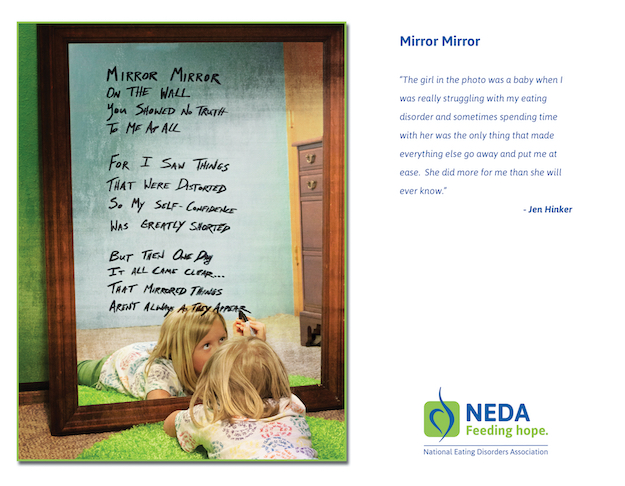
Hinker already had done that before. She has participated in competitions through the National Eating Disorder Association, and one of her photos was featured on the nonprofit’s calendar. It showed a poem written on a mirror with Hinker taking the role of a young girl.
Her foray into self-photography allowed her to explore having an eating disorder in more depth. One photograph shows her sitting on the floor beneath a sign made of wood letters she ordered on Etsy. It spells out E-A-T. The sign now hangs in her Woonsocket kitchen.

“It’s a little reminder, or whatever you want to call it, for me,” Hinker said. “A lot of times, I’ve heard somebody say, ‘Man, she needs a cheeseburger,’ but it’s just not that easy. Some people are deathly afraid to eat. There are so many things that people still don’t understand.”
Another photo shows Hinker speaking to herself with the word “FAT” between her two forms. Her therapist suggested that image.
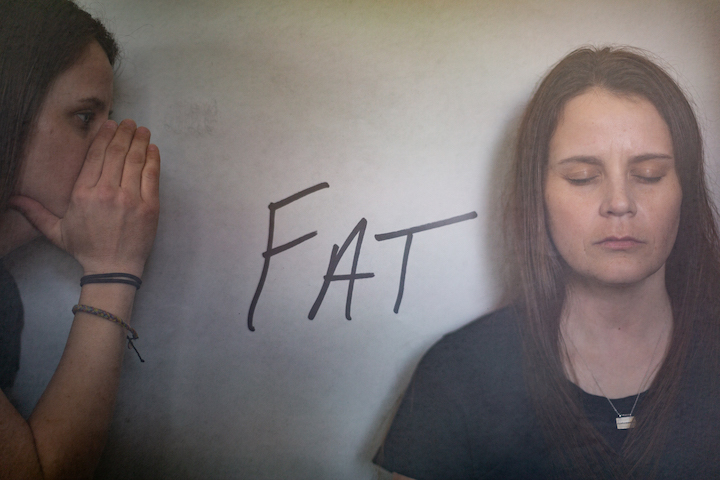
“I have negative thoughts,” Hinker said. “I don’t think they’re necessarily going to leave. That’s one that is a frequent-flyer through my mind.”
A third photo shows Hinker holding a childhood stuffed animal. Her parents brought the Winnie the Pooh toy to her when she was in therapy and needing comfort.

For a fourth photo, Hinker dipped one hand in paint and placed it over her mouth. The hand creates a mask that indicates how difficult it can be for people with eating disorders to speak up and speak out.

“I was very ashamed, and I wanted no one to know,” Hinker said of the process behind that image.
Now, however, she’s ready to speak out and helps others. She has removed the hand that covered her mouth for so long.
“I kept everything very private,” Hinker said. “A lot of people had absolutely no clue. Part of my goal is to just let people know they’re not alone. This is just another step further into recovery. I had someone tell me once that you’re not fully recovered until you can tell your story in the newspaper, and Facebook is pretty close.”
Anorexia Nervosa and Associated Disorders, the support group Stephanie Klemann has organized, will restart from 7 to 8 p.m. July 20 at the Ronning Library meeting room, 3100 E. 49th St., in Sioux Falls. Its regular meeting day will be the third Tuesday every month. Klemann will organize a Zoom link for people unable to attend in person or uncomfortable doing so. Information shared during the meeting will be kept confidential, and no one is required to speak. Preregistration is not required. The meetings are free. Support group meetings are not intended to replace one-on-one therapy.
Share This Story
Most Recent
Videos



Looking amazing @dtsiouxfalls and @washpav! Thanks to @jpickthorn for capturing an incredible night.
Nov 26

Enjoy this glow headed into Halloween week! 📸: @jpickthorn
Oct 31
Hope you had a wonderful summer weekend and are recharged for the week ahead! 📸: @jpickthorn
Jun 27
Beautiful way to start a week! 📸: @jpickthorn
Jan 10
Favorite flyover of the year! Merry Christmas from our entire @pigeon605news flock. 🎄🐦 📸: @actsofnaturephotography
Dec 24
They definitely deserve to be treated like holiday royalty and they were! ❤️ these scenes from tonight’s lighting celebration at @sanfordhealth Children’s Hospital. 🎄
Dec 1
The holidays are here! Perfect night @dtsiouxfalls
Nov 27
Happy Halloween from @avera_health NICU babies! Link in bio to see more! 🎃
Oct 31
Did you know @dtsiouxfalls is filled with 👻 stories? Link in bio … if you dare 😱
Oct 8
When it comes to kids parties nobody wants to be cookie-cutter. Link in bio for the story on what’s trending.
Sep 28
Want to stay connected to where you live with more stories like this?
Adopt a free virtual “pigeon” to deliver news that will matter to you.





Are you a little bird with something to share?

Delivering news that matters to you
Years ago, homing pigeons were used to bring us news we needed. Today, your virtual “pigeon” will deliver what you want to know about the place you call home.
All pigeons are free to good homes!
Our Partners