

Overcoming childhood trauma: ‘I think this may have saved my life’
This paid piece is sponsored by LSS.
“If I don’t do this, I’ll never be able to move on and live my life free.” Lisa reminded herself as she arrived at LSS Behavioral Health. She took a deep breath. She was ready.
At 56, Lisa knew it was time to deal with the abuse she experienced when she was young. She spent decades trying to avoid her past, but it always had a way of bubbling to the surface when she least expected it. “I can no longer quiet the pain and stop the memories from coming back,” were among the first words she spoke to her therapist, Rachel Shepherd, director of LSS Behavioral Health Services.
After a few sessions of talk therapy, Shepherd recognized that EMDR (Eye Movement Desensitization and Reprocessing) could be useful in Lisa’s healing. As a newer, evidence-based therapy, EMDR can help process traumatic memories to alleviate stress and anxiety. The pair talked it through and made a plan to start implementing EMDR in their sessions.
“Lisa was nervous about facing the emotions surrounding her childhood, but she was eager to feel better and be better. Together we talked about what might be happening in her brain and body,” Shepherd said. “I explained that the things she experienced in her childhood and the emotional pain she feels now are very real, and sometimes different techniques are needed to help our body and brain let go of them.”
EMDR works to recount traumatic memories and experiences in incremental doses. It does this by helping the individual maintain focus on a particular stimulus, such as handheld buzzers or lights, that trigger bilateral stimulation and rapid eye movement.
“The vibrations of the buzzer and the lights keep the individual grounded in their current environment—sitting in the room with me at that moment and assuring them that they are safe,” Shepherd explained.
LSS therapists are trained in EMDR as a response to increasing rates of suicide reported in South Dakota. This technique has proven effective in helping reduce post-traumatic stress disorder and other trauma-based symptoms.
“Reaching and processing trauma on a deeper level is important to the long-term success of people who carry the burden of difficult past experiences,” Shepherd explained
After a few sessions of EMDR, Lisa was finally able to verbally process the childhood abuse she had struggled to confront for many years. These immediate results were encouraging, and she was eager to continue her work with Rachel week after week.
“There were a lot of tears, which is expected in this process. Lisa’s breaths grew slower and deeper as we moved through the exercise. She was able to maintain control of her body, relax, and feel what she needed to feel,” Shepherd continued. “This process is really tough. I was amazed by Lisa’s resilience. I don’t think I had ever seen such determination in this stage of the therapeutic process before this moment.”
“It’s a beautiful thing to witness somebody break free from the impact of their trauma and feel better,” she added. “For me, this experience with Lisa was a big ‘a-ha’ moment about the effectiveness of EMDR and the importance of staying on the cutting edge of technology and techniques.”
When she finished her final session of EMDR, Lisa felt at peace with her past.
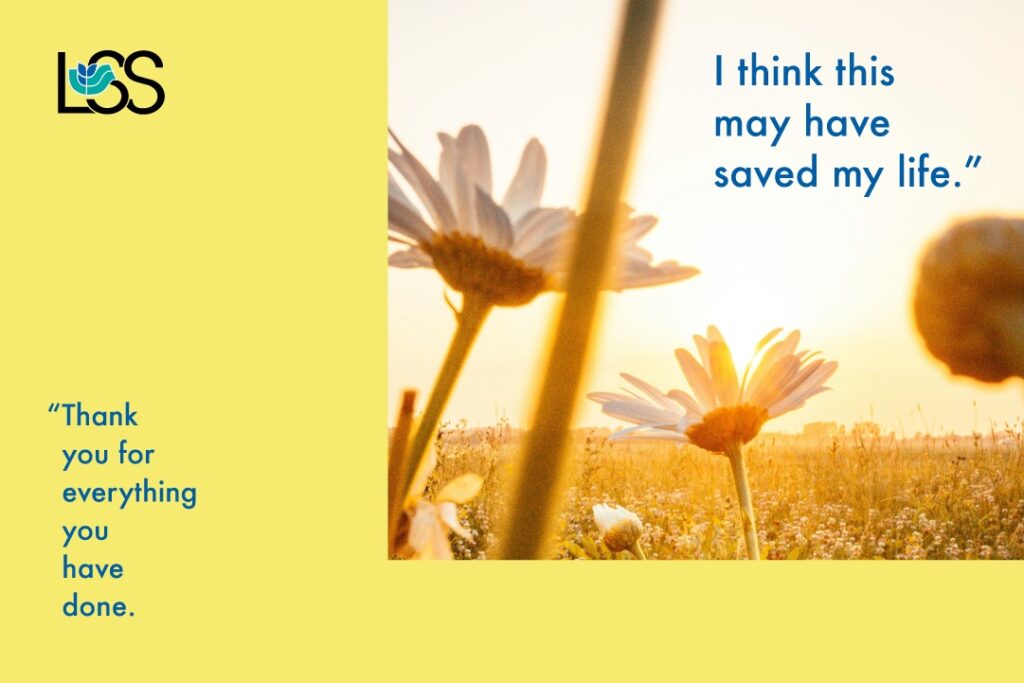
“I will never justify the acts that happened to me, but I no longer feel like they control or define who I am,” she explained. “Thank you for everything you have done. I think this may have saved my life.”
LSS is committed to responding to the ever-changing needs of South Dakota communities through a wide range of services, and their commitment to excellence is prioritized throughout. In recent years, LSS has strengthened its capacity to offer specialized training and education for staff to stay at the forefront of new, proven treatment modalities.
“Our investments in specialized training opportunities help us offer care tailored to each individual’s needs, which ultimately results in positive change, both in the short-term and long-term, for those we serve,” said Amy Witt, LSS chief program officer.
“EMDR is just one example. Throughout the last few years, our staff has strengthened their skills in adolescent suicide and self-harm prevention, as well as understanding, treating, and preventing domestic violence and integrating brainspotting as another therapy tool to help youth heal from trauma.”
At LSS, your unique personal and professional experiences can be used to make others feel heard, rebuild their sense of value, and help them feel safe again. Click here to learn more about careers at LSS and making a positive impact in people’s lives.
Share This Story
Most Recent
Videos



Looking amazing @dtsiouxfalls and @washpav! Thanks to @jpickthorn for capturing an incredible night.
Nov 26

Enjoy this glow headed into Halloween week! 📸: @jpickthorn
Oct 31
Hope you had a wonderful summer weekend and are recharged for the week ahead! 📸: @jpickthorn
Jun 27
Beautiful way to start a week! 📸: @jpickthorn
Jan 10
Favorite flyover of the year! Merry Christmas from our entire @pigeon605news flock. 🎄🐦 📸: @actsofnaturephotography
Dec 24
They definitely deserve to be treated like holiday royalty and they were! ❤️ these scenes from tonight’s lighting celebration at @sanfordhealth Children’s Hospital. 🎄
Dec 1
The holidays are here! Perfect night @dtsiouxfalls
Nov 27
Happy Halloween from @avera_health NICU babies! Link in bio to see more! 🎃
Oct 31
Did you know @dtsiouxfalls is filled with 👻 stories? Link in bio … if you dare 😱
Oct 8
When it comes to kids parties nobody wants to be cookie-cutter. Link in bio for the story on what’s trending.
Sep 28
Want to stay connected to where you live with more stories like this?
Adopt a free virtual “pigeon” to deliver news that will matter to you.





Are you a little bird with something to share?
Delivering news that matters to you
Years ago, homing pigeons were used to bring us news we needed. Today, your virtual “pigeon” will deliver what you want to know about the place you call home.
All pigeons are free to good homes!
Our Partners