Menstrual cup or period panties? An OB-GYN’s tips for period products
This paid piece is sponsored by Avera.
You have a lot of choices to manage your period these days. Whether it’s your first monthly period or your 100th, you may have questions about all these options.
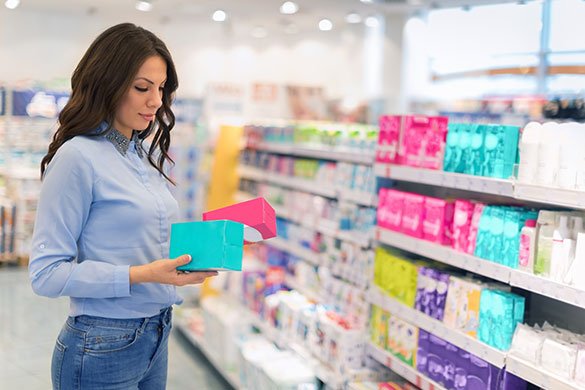
You may wonder: “Which period products are right for me?” and “How do I use period products safely?” If you’ve used products for years, you may be wondering about all the new options available beyond pads or tampons.
Dr. Dominique Boadwine, Avera Medical Group OB-GYN, offers insight on choosing products, using them safely and talking with your physician if you have questions.
How to choose the right period product
There’s no one-size-fits-all when choosing a product. Here are some things to consider:
- Your flow.Period flow varies from woman to woman and period to period. Heavy flow requires thicker material and more frequent changes to avoid leaking.
- Your anatomy.If you have a narrow opening to the vagina, a tampon might be an uncomfortable choice.
- Your lifestyle. What you choose might depend on what you’re doing. For example, if you do ballet or gymnastics, a menstrual cup or tampon avoids pad bumps.
- Your finances. Most options are a one-time use, so you’ll buy supplies regularly. Reusable products can alleviate some of that financial cost over time when they’re cleaned and sanitized appropriately.
“Everyone’s needs are different,” Boadwine said. “The goal is finding what fits your lifestyle and understanding how to use it.”
Menstrual pads
- Wear only for the recommended time, changing every four to eight hours.
- A menstrual pad is a better option to wear while sleeping but change it as soon as you wake up.
- Disposable pads are a one-time product, so you’ll buy supplies regularly.
- Organic disposable pads are available.
If you’re concerned about the eco-effects of disposable products, consider trying reusable menstrual pads. Just wear for the recommended time of no longer than four to eight hours. Clean them by running them under water, then throw them in with your regular laundry.
Tampons
- Wear only for the recommended time, changing every four to eight hours.
- Avoid wearing at night as the tampon can be in for too long.
- Wearing tampons — or any other period product — too long is one of the leading causes of toxic shock syndrome, a serious bacterial infection.
- For younger ladies, there could be a learning curve to placing it correctly and comfortably. Practice using at home before taking them to school.
- Disposable tampons are a one-time product, so you’ll buy supplies regularly.
- Organic disposable tampons are available.
“You can use insertable menstrual products — tampons and cups — as soon as you start having a period,” Boadwine said. “There’s no medical reason to wait if this is the option you want to use.”
Menstrual cups
- If you choose a menstrual cup, there’s a learning curve in placing it correctly. This takes practice and a little time.
- Change your menstrual cup twice a day or more based on your flow.
- Wash your menstrual cup daily with soap and water.
- Boil your menstrual cup to sanitize it just before your period starts. Allow the cup to cool down completely before using.
- Menstrual cups are environmentally friendly because they’re reusable, saving you money.
“Just one cup can last for years if cared for correctly,” Boadwine said.
Period panties
- Most brands of period panties are made with moisture-wicking material, which pulls moisture away from the skin and toward the clothing surface for evaporation.
- Changing your period panties depends on your flow. On lighter days, you could wear them for about 10 to 12 hours; heavier flows, you’ll want to change much sooner to avoid your period soaking through.
- You also can use a tampon, pad or menstrual cup with your period underwear for an extra layer of protection.
- Clean your period panties every day — or, of course, have extra pairs to last through your period. First, wash by hand, then throw in the washing machine. Hang dry, not in a clothes dryer, to avoid melting the plastic liner.
Normalizing period talks and final tips
Between the ages of 10 and 52, a woman will have hundreds of periods.
You may consider tracking your menstrual periods. Record symptoms you’re experiencing. It’s normal to have irregular periods in the first two years. If you have concerns, ask your health care provider if your bleeding pattern is normal.
“Anything new or unusual should be brought to your provider as soon as possible,” Boadwine said. “If you are experiencing painful or heavy periods, it’s a great idea to speak to an expert.”
Schedule an appointment with your primary care provider or an OB-GYN to discuss concerns related to your period or hormones.
Get more wellness tips at AveraBalance.org.
Share This Story
Most Recent
Videos



Looking amazing @dtsiouxfalls and @washpav! Thanks to @jpickthorn for capturing an incredible night.
Nov 26

Enjoy this glow headed into Halloween week! 📸: @jpickthorn
Oct 31
Hope you had a wonderful summer weekend and are recharged for the week ahead! 📸: @jpickthorn
Jun 27
Beautiful way to start a week! 📸: @jpickthorn
Jan 10
Favorite flyover of the year! Merry Christmas from our entire @pigeon605news flock. 🎄🐦 📸: @actsofnaturephotography
Dec 24
They definitely deserve to be treated like holiday royalty and they were! ❤️ these scenes from tonight’s lighting celebration at @sanfordhealth Children’s Hospital. 🎄
Dec 1
The holidays are here! Perfect night @dtsiouxfalls
Nov 27
Happy Halloween from @avera_health NICU babies! Link in bio to see more! 🎃
Oct 31
Did you know @dtsiouxfalls is filled with 👻 stories? Link in bio … if you dare 😱
Oct 8
When it comes to kids parties nobody wants to be cookie-cutter. Link in bio for the story on what’s trending.
Sep 28
Want to stay connected to where you live with more stories like this?
Adopt a free virtual “pigeon” to deliver news that will matter to you.


Are you a little bird with something to share?
Delivering news that matters to you
Years ago, homing pigeons were used to bring us news we needed. Today, your virtual “pigeon” will deliver what you want to know about the place you call home.
All pigeons are free to good homes!
Our Partners