

1 in 3 women have experienced stalking — and it’s abuse
This paid piece is sponsored by Children’s Home Society.
The melting snow in the Children’s Home Shelter for Family Safety parking lot left puddles and wet tire tracks.
Destiny* walked to her car holding the baby in one arm, the hand of her next oldest, a toddler, touching her leg. The two older children jumped beside her, laughing, trying to splash each other.
Destiny helped the children get into the car and buckled up properly. She slid into the driver’s seat. The last time she had loaded her kids in the car, she reflected, was when she had come to the shelter. She had sworn to herself that if Trevor got worse, she would leave, and it had taken all the strength in the world to make good on that promise.
He was worse; there was no doubt about it. Destiny was tired and hopeless, worn down by his anger, insults, threats, his random explosions, his jealousy and his demands. Trevor’s “bad moods,” as he called them, more and more led to slaps and punches. During one of his “bad moods” two weeks ago, he hit her so hard she fell down; after he passed out, she took the children and left.
Since arriving at the shelter, shaking and in tears, Destiny had no contact with Trevor, even though he called and texted her constantly. At first, she was terrified he would find her there — he’d threatened to kill her if she ever left him. She was jumpy and anxious. But the shelter was safe and calm. Every day, she felt a little more relaxed.
Now, she and the kids were on their way to see an apartment that shelter staff had helped find. They were stopped behind a line of cars at a railroad crossing when her phone buzzed. Destiny glanced at it — another text from Trevor. This time there were no blaming or hateful words. It was just a photo of her loading the kids into the car in front of the shelter a few minutes earlier. And it made her blood run cold.
This incident with Trevor is considered stalking. While it may appear trivial next to Trevor’s physical violence toward Destiny, stalking is a way of instilling fear to gain power and control. Quite simply, stalking is a form of abuse.
What is stalking?
Stalking is defined as a pattern of behavior directed at a specific person that would cause a reasonable person to fear for the person’s safety or the safety of others or suffer substantial emotional distress.

It includes unwanted contact such as phone calls, texts and contact via social media, unwanted gifts, showing up/approaching an individual or their family/friends, monitoring, surveillance, property damage and threats.
“Research shows that stalking is surprisingly common,” said Kobi Ringling, assistant program director at Children’s Home Shelter for Family Safety. “Nearly one in three women and one in six men have experienced stalking during their lifetimes — more than half before age 25.”
One misconception is that the typical stalker is a stranger with a twisted obsession. In fact, the vast majority of stalking is perpetrated by people known to the victim. Research shows:
- Four out of five stalking victims in the U.S. are women.
- 59 percent of those female victims are stalked by a current or previous intimate partner.
- Of that group, 81 percent of the women said the person stalking them also had abused them physically during their relationship.
- Among stalking victims threatened, 71 percent of intimate partner victims were actually assaulted, compared to 33 percent of non-intimate partner victims.
- Nearly one in three women stalked by an intimate partner also were assaulted sexually by that partner.
- Women who were stalked after obtaining a protection order were nine times more likely to experience sexual assault.
- Stalking increases the risk of intimate partner homicide by three times.
Statistically, intimate partner stalkers make more threats, use more stalking tactics and assault their victims more than other types of stalkers, Ringling said. They are more likely to reoffend after court intervention and reoffend more quickly.
In all 50 states, stalking is a crime. In South Dakota, the first offense is a misdemeanor, while the second or subsequent offenses are felonies. A quick look at South Dakota criminal offense records shows that stalking often accompanies assault. However, stalking can be difficult to track and prove.
Stalking and domestic violence
The stalking seen by staff at Children’s Home Shelter for Family Safety is generally another tactic used by abusers.
“Many times, stalking is part of domestic violence,” Ringling explained. “To the victim, it may come across as caring or love instead of a sign of power and control over the victim.”
“If stalking wasn’t part of the relationship, it may show up after a survivor has left the abusive relationship. The most dangerous time for a survivor is when they leave the relationship,” she said. “This is because the abuser is losing the power and control they had over the victim.”
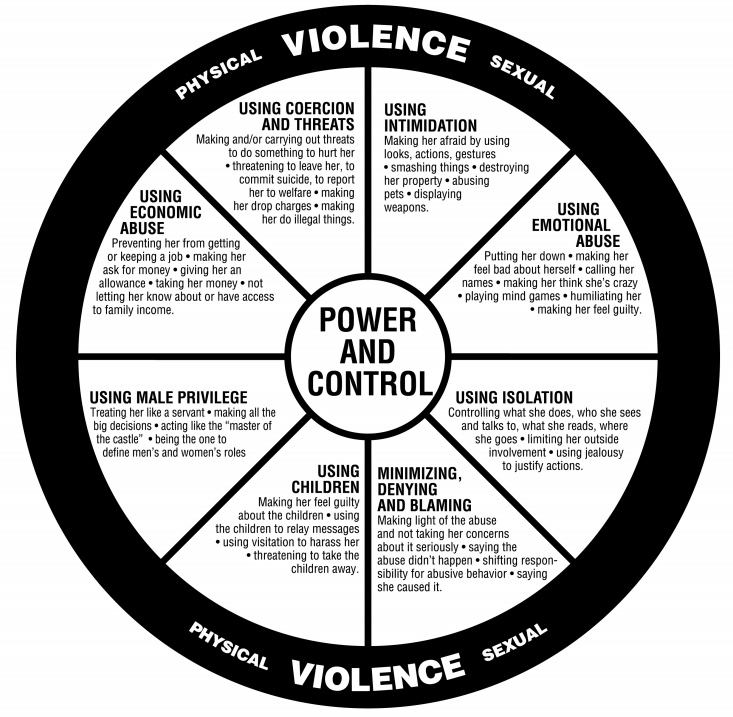
To regain power and bring the survivor back into the relationship, the abuser may begin stalking the survivor. In a sense, they control the fear and anxiety of the victim by making them feel like they are never alone or safe.
“Most of the stalking happens through social media or repeated calling or texting,” Ringling said. “If the survivor is working or has children going to school, the abuser may go to the school or work to scare the survivor. Sometimes, they may actually make contact with the survivor, or they will sit outside but ensure they are seen so the survivor is aware of their presence. This is, again, to regain that power and control.”
Impact of technology
Technology has given abusers many tools for stalking. Nationally, more than twice as many victims are stalked with technology than without.
“It’s easier to stalk someone when you have the digital tools,” Ringling said. “Even if the abuser doesn’t know the survivor’s exact location, because of technology, they can still stalk or harass to maintain the power and control.
“There are many apps, not just social media platforms, that are used for stalking, and they can cause a lot of fear and unsafety,” she continued. “Cyberstalking can include the use of GPS to monitor their victim’s location or installing software that tracks and steals account information or passwords.”
When survivors in shelter are experiencing stalking, staff members help them in a variety of ways. They talk to clients about blocking the abuser’s number and on social media and caution them not to accept new friend requests.
Staff members also help clients put extra privacy measures on their accounts. In cases where it’s suspected that tracking software has been installed on a phone or a vehicle, staff members have relationships with local experts who can check.
“Some clients decide to get rid of everything digital that they had prior and get all new items,” Ringling said. “We can assist them with getting new phones and setting up new accounts as needed.”
Are you being stalked?
If you feel you are in imminent danger or are afraid of a threat of harm, call 911 immediately.
If you need nonemergency help, call the shelter’s 24-hour crisis line at 605-338-4880. To learn more about stalking, visit stalkingawareness.org or nnedv.org.
*To protect the privacy of the people served by the Children’s Home Shelter for Family Safety, names and photos represent clients and ensure confidentiality.
Data is from SPARC and National Network to End Domestic Violence.
Share This Story
Most Recent
Videos



Looking amazing @dtsiouxfalls and @washpav! Thanks to @jpickthorn for capturing an incredible night.
Nov 26

Enjoy this glow headed into Halloween week! 📸: @jpickthorn
Oct 31
Hope you had a wonderful summer weekend and are recharged for the week ahead! 📸: @jpickthorn
Jun 27
Beautiful way to start a week! 📸: @jpickthorn
Jan 10
Favorite flyover of the year! Merry Christmas from our entire @pigeon605news flock. 🎄🐦 📸: @actsofnaturephotography
Dec 24
They definitely deserve to be treated like holiday royalty and they were! ❤️ these scenes from tonight’s lighting celebration at @sanfordhealth Children’s Hospital. 🎄
Dec 1
The holidays are here! Perfect night @dtsiouxfalls
Nov 27
Happy Halloween from @avera_health NICU babies! Link in bio to see more! 🎃
Oct 31
Did you know @dtsiouxfalls is filled with 👻 stories? Link in bio … if you dare 😱
Oct 8
When it comes to kids parties nobody wants to be cookie-cutter. Link in bio for the story on what’s trending.
Sep 28
Want to stay connected to where you live with more stories like this?
Adopt a free virtual “pigeon” to deliver news that will matter to you.






Are you a little bird with something to share?
Delivering news that matters to you
Years ago, homing pigeons were used to bring us news we needed. Today, your virtual “pigeon” will deliver what you want to know about the place you call home.
All pigeons are free to good homes!
Our Partners